
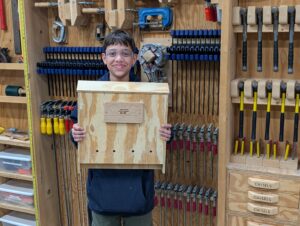
At first glance, a bat box may seem like a simple woodworking project. But for Scouts participating in the Woodwork Merit Badge program during Specialty Week at Camp William B. Snyder, projects like these are about much more than measuring, cutting, and assembling wood.
They are opportunities to learn about conservation, wildlife habitats, research, problem-solving, and community stewardship.
That was the experience of James, a Scouts BSA member who recently completed a bat box as part of his Woodwork Merit Badge requirements in Michael’s Woodshop. Before a single board was cut, James and the volunteer staff researched what bats need in order to thrive and how to design a structure that would provide a safe habitat.
“I am happy to provide a home for 3-4 bats,” James said.
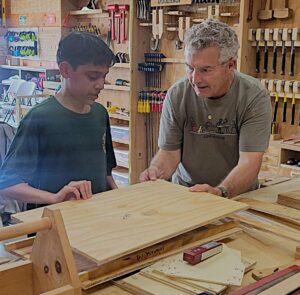 The project helped James discover that successful woodworking often requires understanding the purpose behind what is being built. Creating a bat habitat meant learning about local wildlife, conservation practices, and the threats bats face in their natural environment.
“I learned bats can be eaten by predators, so you need to make sure you don’t put the bat box on a tree because birds, raccoons, and other creatures could get the bats,” he explained.
That research shaped decisions about both the design of the box and how it should ultimately be installed. By studying conservation guidelines and best practices, the Scout and adult volunteers ensured the project would provide an effective and safe habitat for bats in the region.
For James, the project also carried a personal connection. “I did the project to help my Dad because he said he wanted to build a bat box,” he said.
What began as an idea became a hands-on learning experience that took patience and dedication to complete. “It took a couple of weeks but I built it!” James added proudly.
The project reflects the broader mission of Michael’s Woodshop, which serves Scouts of all ages and skill levels throughout Scouting America National Capital Area Council. While woodworking skills remain at the heart of the program, volunteers emphasize that every project incorporates lessons that extend far beyond the workshop.
“The Woodshop at Camp William B. Snyder continues to fulfill Michael Snowden’s vision of providing a safe and empowering environment for exploring the craft of woodworking,” said volunteer Shop Steward Gene. “The dedicated all-volunteer staff are committed to sharing their individual interests and passion for woodworking with all levels of Scouting, from introductory projects at the Cub Scout level through Woodwork Merit Badge and Eagle Scout service projects.”
Gene noted that projects such as bluebird nesting boxes and bat houses are more than woodworking exercises. “Projects such as Bluebird Nesting Boxes and the Bat House are modeled after established designs to align with regional and state level conservation practices,” he said.
Located at Camp William B. Snyder, Michael’s Woodshop provides the tools, equipment, and workspace needed to complete almost any woodworking or carpentry project. The facility can be reserved by Scouts, units, and districts for a variety of programs, including Eagle Scout service projects, Cub Scout den activities, troop events, and district-level programs.
For many youth participants, the workshop becomes a place where craftsmanship meets education. While learning how to safely use tools and complete a project, Scouts also develop skills in research, planning, environmental awareness, and critical thinking.
As interest in the shop continues to grow, the volunteer team is seeking additional support from both adults and youth. Michael’s Woodshop is operated entirely by volunteer Shop Stewards, and opportunities are available for individuals who want to share their skills, mentor young people, or help keep the shop running year-round. New opportunities are also available for adults to serve as Seasonal Volunteers during Pinewood Derby season or as Merit Badge Counselors supporting Woodwork and Wood Carving Merit Badge programs.
For Scouts like James, projects such as the bat box demonstrate that woodworking is also about building knowledge, confidence, and a deeper understanding of the world around them. By combining craftsmanship with conservation education, Michael’s Woodshop continues to help young people create projects that leave a lasting impact on both their communities and the environment.
