• Skip to primary navigation
  • Skip to main content
  • Skip to primary sidebar
We Own Adventure

We Own Adventure

Scouting News for the DC Metro Area

  • Home
  • Newsletters
  • Sponsorship Opportunities
  • Sport Adventures
  • Submit Your News
  • Be an Influencer!
  • Scouting America National Capital Area Council Main website

Cynthia Griffiths

Twenty Summers Later: A Camp William B. Snyder Staffer Returns Home

July 28, 2026 by Cynthia Griffiths

As Camp William B. Snyder celebrates its 20th summer serving youth and families across Scouting America National Capital Area Council, one former staff member found himself walking familiar trails once again, but this time, he was alongside his own son.

Joe Sciacca was part of Camp William B. Snyder’s very first summer staff when the camp opened in 2006. Over the next several years, he helped shape the camp experience for hundreds of young people as a member of the Aquatics staff.

Two decades later, he returned as a father and volunteer Assistant Scoutmaster which was a journey through time, “It’s been so long. The trees have grown. There were no trees when camp opened. The first year was all mud. I can see how time has passed.”

As Joe walked through camp, he could see the dramatic transformation that has taken place over twenty years. Today, mature trees provide shade throughout the property, and the camp’s established program areas welcome thousands of visitors each year. Yet for Joe, it was easy to remember a very different Camp William B. Snyder that was built with great potential.

Located in Prince William County, Virginia, Camp William B. Snyder encompasses 350 acres, including a managed wetland with program areas for fishing and boating, a water-slide pool, and an air-conditioned dining hall. A premier camping destination within Scouting America National Capital Area Council, the camp has welcomed Scouts, Leaders, and community organizations year-round since 2006.

Those first staff members were helping to create traditions and experiences that future generations would simply take for granted. Fortunately, the camp’s inaugural staff brought experience with them, “A number of staff came with experience from Camp Ross at Goshen Scout Reservation.” That experience made a difference. “They were a solid team, said Joe.”

“The first year staff stayed by shower house 5 and then they stayed in Sites 1 and 2 the next year.” For Joe, his return visit brought the opportunity to relive part of his own camp experience. As fate would have it, he and his son’s troop stayed in Sites 1 and 2, the very locations where staff members lived during the camp’s second year.

Among the traditions born during those formative weeks was one that continues to bring smiles today. “Wayne Dillon wrote the Camp Snyder Grace during a really bad storm during the first staff week,” explained Joe. The grace quickly became a beloved part of camp life. However, an unexpected twist helped create another tradition that has endured for twenty years. Because Wayne Dillon’s name appeared beneath the prayer in camp materials, young Cub Scouts who were asked to read the grace often continued reading right through the signature line. To this day, Scouts still say Wayne Dillon’s name aloud at the end of the grace, a special reminder of camp’s earliest days and the people who helped establish its culture.

While serving overnight as an Assistant Scoutmaster, Joe also volunteered to assist with Canoeing and Rowing Merit Badge instruction. It was a natural fit. Back in his staff days, Joe had served on Camp Snyder’s Aquatics staff. His willingness to share that knowledge with today’s Scouts demonstrated one of Scouting’s most enduring successes: the lifelong impact of experiences learned at camp. The skills, confidence, and leadership developed during those early summers did not disappear when Joe left staff and now they are being passed to a new generation.

For Camp Director Cindy Griffiths, Joe’s participation perfectly captured what Camp Snyder’s 20th summer celebration is all about. “When we talked with Joe and realized he was in the big staff photo in the lobby of the Administration building from the very first year, we just had to talk with him about that first year and what it was like.”
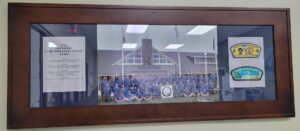
Seeing one of the original staff members return as a parent and volunteer offered a powerful reminder of the camp’s lasting influence. “It was heartwarming to see him enjoying camp skills and the camp facilities and know that he had returned to camp which was obviously a part of his life he wanted to share with his son.”

That sentiment may be the true story of Camp William B. Snyder’s first twenty summers. Buildings have been added. Trees have grown. Programs have expanded. Thousands of young people have learned skills, earned advancements, and discovered newfound confidence. Yet the camp’s greatest achievement is something less visible. It is found in moments like Joe Sciacca’s return, when a former staff member sleeps in the same campsites, teaches the same aquatics skills he learned years ago, and shares those experiences with his son.

Twenty years after helping launch Camp William B. Snyder, although camp has changed, its purpose remains exactly the same: to bring generations together through adventure, service, leadership, and the timeless values of Scouting.

And for Camp Snyder, there may be no better way to celebrate twenty summers than that!

Filed Under: At Camp

Local Leaders Help Scouts Earn Citizenship in the Community at Camp William B. Snyder

July 28, 2026 by Cynthia Griffiths

One of the wonderful aspects of our Specialty Week camps at Camp William B. Snyder is the opportunity for Scouts to learn directly from local experts and community leaders. These special visitors help bring merit badge requirements to life, giving Scouts meaningful, real-world experiences that deepen their understanding of important topics.

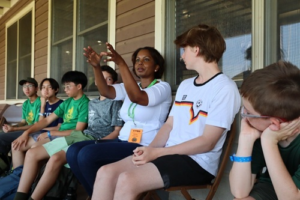
As part of the Citizenship in the Community Merit Badge, Scouts had the unique opportunity to meet and interview elected officials from Prince William County during the Specialty Week camps this summer.


During Week 1, Scouts welcomed Prince William County Board of County Supervisors Chair At-Large, The Honorable Deshundra Jefferson. In Week 2, they were joined by Gainesville District Supervisor, The Honorable George Stewart. Both leaders generously took time from their busy schedules to engage with Scouts and answer thoughtful questions about local government, community issues, and public service.

The discussions gave Scouts valuable insight into how local government works and the challenges facing their communities. Scouts also learned how young people can become involved and make a positive difference through service, civic engagement, and community leadership.

These conversations provided an outstanding opportunity for Scouts to fulfill merit badge requirements while gaining a firsthand perspective on citizenship in action.

We extend our sincere thanks to The Honorable Deshundra Jefferson and The Honorable George Stewart for investing in our Scouts and helping make their camp experience both educational and inspiring.

A special thank you also goes to David Seitz, Merit Badge Counselor and Camping Committee Chair, whose volunteer leadership and dedication helped make both the Citizenship in the Community Merit Badge program and Specialty Week camp such a success.

Experiences like these demonstrate the power of Scouting to connect youth with community leaders, encourage civic responsibility, and inspire the next generation of engaged citizens.

Filed Under: At Camp

Scouts Build More Than Woodworking Skills at Camp William B. Snyder

July 27, 2026 by Cynthia Griffiths

At first glance, a bat box may seem like a simple woodworking project. But for Scouts participating in the Woodwork Merit Badge program during Specialty Week at Camp William B. Snyder, projects like these are about much more than measuring, cutting, and assembling wood.

They are opportunities to learn about conservation, wildlife habitats, research, problem-solving, and community stewardship.

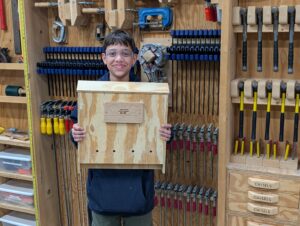
That was the experience of James, a Scouts BSA member who recently completed a bat box as part of his Woodwork Merit Badge requirements in Michael’s Woodshop. Before a single board was cut, James and the volunteer staff researched what bats need in order to thrive and how to design a structure that would provide a safe habitat.

“I am happy to provide a home for 3-4 bats,” James said.

The project helped James discover that successful woodworking often requires understanding the purpose behind what is being built. Creating a bat habitat meant learning about local wildlife, conservation practices, and the threats bats face in their natural environment.
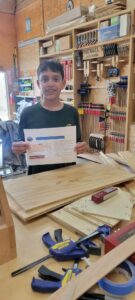
“I learned bats can be eaten by predators, so you need to make sure you don’t put the bat box on a tree because birds, raccoons, and other creatures could get the bats,” he explained.

That research shaped decisions about both the design of the box and how it should ultimately be installed. By studying conservation guidelines and best practices, the Scout and adult volunteers ensured the project would provide an effective and safe habitat for bats in the region.

For James, the project also carried a personal connection. “I did the project to help my Dad because he said he wanted to build a bat box,” he said.

What began as an idea became a hands-on learning experience that took patience and dedication to complete. “It took a couple of weeks but I built it!” James added proudly.

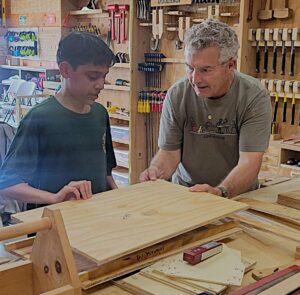
The project reflects the broader mission of Michael’s Woodshop, which serves Scouts of all ages and skill levels throughout Scouting America National Capital Area Council. While woodworking skills remain at the heart of the program, volunteers emphasize that every project incorporates lessons that extend far beyond the workshop.

“The Woodshop at Camp William B. Snyder continues to fulfill Michael Snowden’s vision of providing a safe and empowering environment for exploring the craft of woodworking,” said volunteer Shop Steward Gene. “The dedicated all-volunteer staff are committed to sharing their individual interests and passion for woodworking with all levels of Scouting, from introductory projects at the Cub Scout level through Woodwork Merit Badge and Eagle Scout service projects.”

Gene noted that projects such as bluebird nesting boxes and bat houses are more than woodworking exercises. “Projects such as Bluebird Nesting Boxes and the Bat House are modeled after established designs to align with regional and state level conservation practices,” he said.

Located at Camp William B. Snyder, Michael’s Woodshop provides the tools, equipment, and workspace needed to complete almost any woodworking or carpentry project. The facility can be reserved by Scouts, units, and districts for a variety of programs, including Eagle Scout service projects, Cub Scout den activities, troop events, and district-level programs.

For many youth participants, the workshop becomes a place where craftsmanship meets education. While learning how to safely use tools and complete a project, Scouts also develop skills in research, planning, environmental awareness, and critical thinking.

As interest in the shop continues to grow, the volunteer team is seeking additional support from both adults and youth. Michael’s Woodshop is operated entirely by volunteer Shop Stewards, and opportunities are available for individuals who want to share their skills, mentor young people, or help keep the shop running year-round. New opportunities are also available for adults to serve as Seasonal Volunteers during Pinewood Derby season or as Merit Badge Counselors supporting Woodwork and Wood Carving Merit Badge programs.

For Scouts like James, projects such as the bat box demonstrate that woodworking is also about building knowledge, confidence, and a deeper understanding of the world around them. By combining craftsmanship with conservation education, Michael’s Woodshop continues to help young people create projects that leave a lasting impact on both their communities and the environment.

Filed Under: At Camp, Featured

Scouts Head to the Adventure of a Lifetime at the 2026 National Jamboree in West Virginia

July 27, 2026 by Cynthia Griffiths

On Wednesday, July 22, 2026, Scouting America National Capital Area Council Scouts and adult Leaders traveled together to join thousands of young people from across the nation at the 2026 National Jamboree, taking place July 22–31, 2026, at the Summit Bechtel Reserve in Glen Jean, West Virginia.

Our Scouts are among the participants experiencing one of the largest and most exciting youth events in America. Held every four years by Scouting America, the National Jamboree brings together Scouts from across the country for an unforgettable experience filled with adventure, leadership development, service, friendship, and outdoor challenges.
The Summit Bechtel Reserve provides a world-class setting for the event, offering opportunities for rock climbing, zip lining, mountain biking, shooting sports, whitewater activities, STEM programs, fireworks and drone shows, and countless other experiences designed to inspire and challenge young people while building fellowship with Scouts from across the country.

For the Scouts attending, the Jamboree represents much more than a camping trip. It is an opportunity to meet peers from every corner of the United States, exchange ideas, develop leadership abilities, and experience the values of Scouting on a national stage.

As our local contingent posts from Summit, families, friends, and community members are encouraged to follow their journey through social media channels and websites, and share the adventure with connections on your favorite platforms.

Scouting America serves young people through programs that build character, citizenship, leadership, and personal fitness. The National Jamboree showcases the very best of those values while celebrating the adventures and opportunities available through Scouting.

Filed Under: Adventure

From Campouts to the School Board: How Scouting Shaped a Student Leader

June 30, 2026 by Cynthia Griffiths


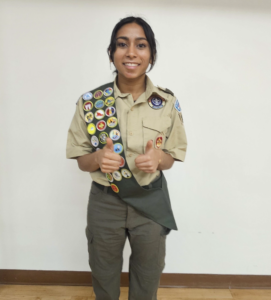
As Anuva Maloo finishes up her one-year term as the student member of the Board of Education for Montgomery County Public Schools in Maryland on June 30, 2026, she was able to reflect on how an unexpected journey through Scouting helped guide her voice, her values, and her impact. An Eagle Scout from Troop 1444, she has spent her term representing students and demonstrating how leadership skills can translate into meaningful change in complex systems.

For her, Scouting went beyond being an extracurricular activity to become a framework for decision-making which resulted in the opportunity to serve at one of the highest levels of student representation in her community.

“The Scout Law… it’s burned into my brain,” she said. “Trustworthy, loyal, helpful, friendly, kind… those values really represent the kind of leader I hope to be.”

She even referenced those principles during her swearing-in speech, using them as a guidepost for how she approached the role. Whether weighing policy decisions or listening to community concerns, Scouting gave her a moral compass that encouraged her to think not just practically, but ethically.

That perspective proved especially valuable when navigating some of the most sensitive issues facing the district.

Seeing Systems as More Than Structures

One of the most challenging topics during her term was redistricting which was a complex and often emotional issue involving school boundaries, closures, and community identity. While many approached the issue through data and logistics, she brought a different lens.

She recalled a lesson from an architecture merit badge, where she learned how even the smallest structural component of a building plays a critical role.

“If you remove what seems like a tiny piece, the whole structure can fall,” she explained.

That idea became a powerful metaphor. To her, schools are not just buildings but are ecosystems of relationships, culture, and community. Removing or redistributing even a small group of students could fundamentally alter the identity of a school.

“It’s not just about the physical structure,” she said. “It’s about the people. Even one small community – if you take it away – you lose something important.”

This ability to connect technical decisions with human impact became one of her defining strengths as a board member.

Turning Personal Experience into Policy Change

Her leadership wasn’t limited to big-picture issues. Some of her most meaningful work stemmed from deeply personal experiences, especially around equity and access.

One of the initiatives she championed focused on menstrual hygiene products in schools. Despite state requirements mandating their availability, many students reported that supplies were inconsistent or unavailable. She understood the issue firsthand.

She shared a story from an early camping trip, when she was with one of the first groups of girls in her Troop. Faced with an uncomfortable situation and unsure who to turn to, she and her peers came up with a simple solution: create their own supply as part of their first aid kits.

“It was such a small thing,” she said. “But it made a difference.”

Years later, that same mindset guided her work on the board. Instead of waiting for a perfect system-wide fix, she pushed for immediate, practical solutions like placing baskets of supplies in schools so students would have access even when dispensers failed.

“If we can focus on something small and make an impact right here, let’s see where it goes,” she said. “That’s how change starts.”

Representation Matters

As one of the few recent female student members of the board and an Eagle Scout, she is keenly aware of the importance of representation.

“I’m really proud to say that I’m an Eagle Scout,” she said. “I hope to continue to spread that message and encourage other students, especially girls, to join.”

The Power of Community

Ask her what keeps her grounded, and she doesn’t hesitate: the people.

From fellow Scouts to Board colleagues to mentors and community leaders, the relationships she’s built have been just as impactful as the skills she’s learned.

“Scouting gave me a community that’s always pushing you to be better,” she said. “Even if it was just a few other girls when I first joined, that was enough to make me stay.”

Years later, she still sees Scouting as a lifelong network that transcends age, background, and experience. “In Scouting, it doesn’t matter if someone is older or younger,” she said. “We’re just Scouts. And that connection stays with you.”

A Message for Young People

For students considering whether to try Scouting or any new activity her advice is simple: “Just go and experience it,” she said. “If you spend even one day with that community, you’ll understand.”

For her, Scouting provided a community that was always pushing her to be better and who she could always truly rely on. She leaned on her fellow Scouts and hopes they will be friends for a lifetime.

As she looks ahead, she carries forward not just accomplishments, but also a mindset rooted in service, resilience, and a belief that even small actions can create lasting change.

From campouts to Board meetings, her journey is proof that leadership doesn’t start in the boardroom. Sometimes, it starts around a campfire.

Filed Under: Eagle of the Week, Featured, Top Story

Local Hero Credits Scouting for Split-Second Life-Saving Action

June 29, 2026 by Cynthia Griffiths

Last Wednesday at a D.C. neighborhood movie night, teens threw a Roman candle firework into the crowd of parents and children. Josh grabbed it and threw it away from everyone else. When asked why he acted to help, he credited Scouting.
Watch the NBC Washington report for the full story: https://www.nbcwashington.com/…/fireworks-thrown-into…
When we invest in youth through Scouting, we build communities where people step up for one another. Scouting prepares youth to lead and serve when it matters most. Get involved in Scouting today.

Filed Under: Featured, Scouting Programs

  • Page 1
  • Page 2
  • Page 3
  • Interim pages omitted …
  • Page 10
  • Go to Next Page »

Primary Sidebar

NCAC Social Media

  • Facebook
  • Instagram
  • Twitter
  • YouTube

[the_ad_group id=”50″]

Latest Issue

TSD Summer '18 is on Issuu

Archives

  • July 2026
  • June 2026
  • May 2026
  • April 2026
  • March 2026
  • February 2026
  • January 2026
  • December 2025
  • November 2025
  • October 2025
  • September 2025
  • August 2025
  • July 2025
  • June 2025
  • May 2025
  • April 2025
  • March 2025
  • February 2025
  • January 2025
  • December 2024
  • November 2024
  • October 2024
  • September 2024
  • August 2024
  • July 2024
  • June 2024
  • May 2024
  • April 2024
  • March 2024
  • February 2024
  • January 2024
  • December 2023
  • November 2023
  • October 2023
  • September 2023
  • August 2023
  • July 2023
  • June 2023
  • May 2023
  • April 2023
  • March 2023
  • February 2023
  • January 2023
  • December 2022
  • November 2022
  • October 2022
  • September 2022
  • August 2022
  • July 2022
  • June 2022
  • May 2022
  • April 2022
  • March 2022
  • February 2022
  • January 2022
  • December 2021
  • November 2021
  • October 2021
  • September 2021
  • August 2021
  • July 2021
  • June 2021
  • May 2021
  • April 2021
  • March 2021
  • February 2021
  • January 2021
  • December 2020
  • November 2020
  • October 2020
  • September 2020
  • August 2020
  • July 2020
  • June 2020
  • May 2020
  • April 2020
  • March 2020
  • February 2020
  • January 2020
  • December 2019
  • November 2019
  • October 2019
  • September 2019
  • August 2019
  • July 2019
  • June 2019
  • May 2019
  • April 2019
  • March 2019
  • February 2019
  • January 2019
  • October 2018
  • July 2018
  • May 2018

Follow Us!

  • Facebook
  • Flickr
  • Instagram
  • LinkedIn
  • YouTube

You Might Also Like…

  • Director David Henrie Invites NCAC to Digital Movie Premiere

    August 26, 2020

  • Missing Summer Day Camp or Resident Camp?

    June 25, 2020

  • Microscope + Camping = FUN !!!

    June 15, 2020

  • Family – Fun – Flag – FOURTH!

    June 14, 2020

  • Guidance on Resuming In-Person Scouting Activities

    June 12, 2020

  • NCAC Scouting at Home 2020 Award for Unit Scouters!

    May 29, 2020

  • Introducing the NCAC Scouting at Home 2020 Award!

    May 11, 2020

  • NCAC Response to COVID-19

    April 4, 2020

  • Scouting At Home Challenge!

    March 19, 2020

  • Scout Service Center Closing

    March 17, 2020

  • Help Celebrate NCAC Camping Centennial at Camp Snyder’s Work Days for All

    March 5, 2020

  • General David L. Goldfein Receives the Distinguished Eagle Scout Award

    February 25, 2020

  • TUSKEGEE AIRMAN RECEIVES NCAC LIFETIME ACHIEVEMENT AWARD

    February 14, 2020

Copyright © 2026 · Genesis Elk on Genesis Framework · WordPress · Log in