Bear and Webelos Den Leaders! Now that you are in your role of Den Leader to incredible Bear and Webelos Scouts, you and your Den are invited to attend Summer Camp at Camp Ross at Goshen Scout Reservation this coming summer!
Camp Ross is home to a week-long summer camp experience just for rising (incoming) Webelos and rising Arrow of Light Scouts. Here, they’ll take part in some amazing outdoor adventures, including swimming, boating, fishing, archery, BB shooting, hiking, and outdoor skills development (to name a few)!
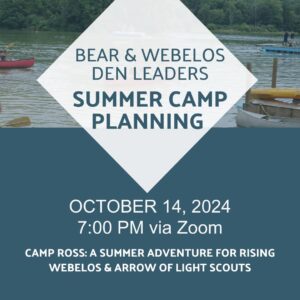
You are invited to start planning your Summer 2025 Adventures on Monday, October 14, 2024 at 7:00 pm. We’ll review “A Day in the Life” at Camp Ross, walk through the registration process, and answer any questions you may have.
As you are learning, the Cub Scout Program provides Scouts with the opportunity to learn about being a member of their family, how to take an active role in serving their neighborhood, and living by the ideals of the Scouting Program. At Camp Ross, our Scouts become members of a Camp Community with Scouts from across the Council. They meet new friends, make lasting memories, and take critical steps in learning about the next part of their Scouting journey: Scouts BSA.
To attend this Zoom Meeting, please register at:
Camp Ross: A Summer Camp Adventure for Rising Webelos and Arrow of Light Scouts
https://ncacbsa-org.zoom.us/webinar/register/WN_gj5BxZxkSHSthMnV3QXQrw#/registration
In the meantime, explore what NCAC Cub Scout Parents and Leaders are saying about their own Camp Ross experience on our YouTube Channel:
Enhance Your Pack Summer! What Leaders are Saying About Camp Ross
“I look forward to seeing your Den at Camp Ross this summer!” – Elisabeth Warren, Goshen Scout Reservation Director, National Capital Area Council, BSA
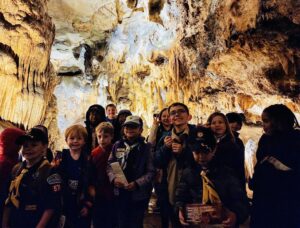 STEM Scouts Lab 239 in Fredericksburg, VA, is a beacon of innovation and scientific exploration for young minds. With a mission to inspire and nurture the next generation of scientists, engineers, and innovators, this lab actively cultivates a passion for STEM among elementary and middle school students.
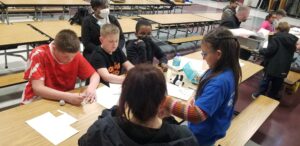
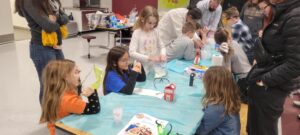
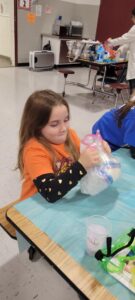 Last year, the elementary school lab at Rocky Run Elementary mentored 18 aspiring scientists. The curriculum included Chemistry, Archaeology, Robotics/Coding, and Inventing modules that aligned with students’ interests, challenged their understanding of the world around them, and fostered critical thinking skills. Students engaged in a hands-on learning environment, conducting experiments and projects that brought abstract concepts to life. Dedicated adult mentors enriched the experience by providing personalized support and encouragement to each student.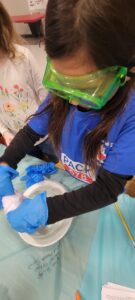
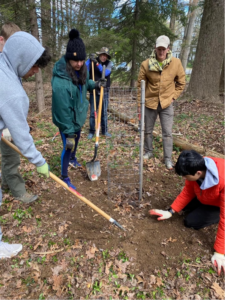
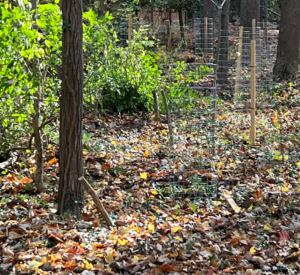 However, planting native species was only the first step in park restoration, and the second part involved removing invasive species. It is a necessary part of this project to help the native plants thrive. Invasive species are known to outcompete native plants for resources, which can disrupt the balance of ecosystems and pose a serious threat to all wildlife within them. Removing invasive species at Glyndon Park will help ensure the park’s newly planted native species thrive in the future. Some of the invasive species removed that threatened native wildlife included English ivy, periwinkle, leatherleaf mahonia, wineberry, creeping euonymus, autumn olive, Japanese holly, Japanese honeysuckle, and barberry. I partnered with the local community, including schools, Scouts BSA, Girl Scouts, Nature Specialist Club, and the Town of Vienna. I worked with over 50 volunteers and this project had over 200 volunteer hours. Additionally, I educated over 140 people on the importance of forestation and range management.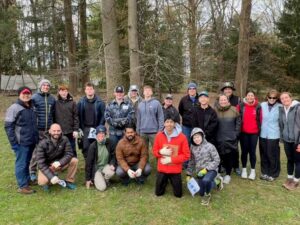
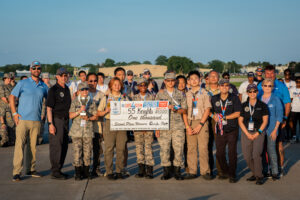
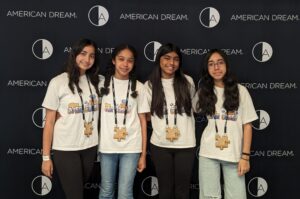
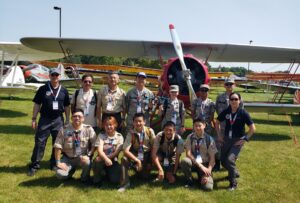
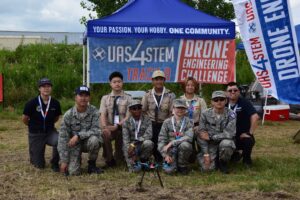
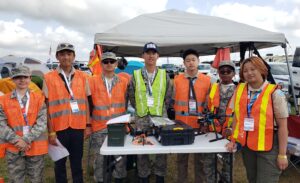 Congratulations to the five Scouts from BSA Troop 55B and 55G (Great Falls, VA), who worked along with Civil Air Patrol Cadets from William P. Knight composite squadron (Herndon, VA), won the 2024 AMA UAS4STEM Drone Engineering Competition’s National Second Place Award at EAA AirVenture Oshkosh on July 24th. Among 17 teams competing, the joint team “55 Knights” is the only Virginia team, the only Scouts BSA Troop sponsored team at the competition, and the only winning CAP team for the 2024 season.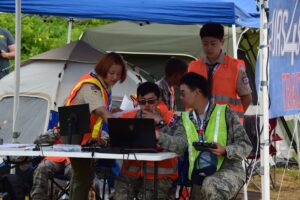
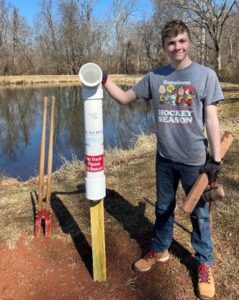 My name is Jason W, and I am an Eagle Scout in Troop 1094 in Darnestown, Maryland. I really enjoy being outside and I really enjoy watching and learning about wildlife. I look forward to becoming a wildlife biologist one day. Back in 2022, I learned about the
 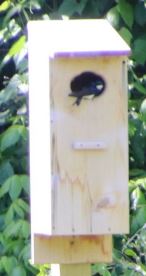 For my 2nd Distinguished Conservation Service Award Project, I began a three-stage project to improve the fish and wildlife in my hometown of Poolesville, Maryland. The first stage was to hopefully attract a new breed of ducks to Poolesville. More specifically, wood ducks. I installed four nesting boxes at a quiet pond in Poolesville last fall. While I haven’t seen any wood ducks yet, this spring, I was able to witness hooded mergansers (cavity nesters) at this pond and watch tree swallows build nests in the boxes.
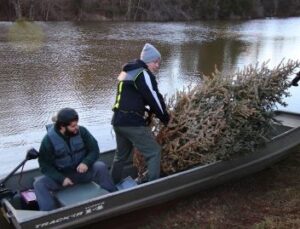 My third stage of the project was a lot of fun. I asked my community to promise to let me collect their Christmas trees after the holiday season. A fellow troop Scout and I drove around town and picked up 30 Christmas trees in January. We learned as we drove around that local farmers also collect Christmas trees to feed their goats. After we collected the trees, I recruited three of my ice hockey teammates to help me wire cinderblocks to these trees. We had to drill holes through the trees, insert the wire through the tree, and then to the cinderblock. Otherwise, the tree will float and not sink. At the end of January, a few scouts, along with my distinguished service conservation advisor, Ms. Sara Holtz, my project conservation advisor, Mr. King, and a few members of his work crew, helped me drop 30 Christmas trees into the deepest pond in Poolesville (Here is my