
 One of the easiest, most effective ways you can support National Capital Area Council is through workplace giving, an employer-sponsored program that empowers you to support your favorite charities through tax-deductible donations deducted directly from your paycheck.
Through our membership with America’s Charities, employees at hundreds of public and private organizations can donate to NCAC through payroll contributions.
Combined Federal Campaign (CFC)
CFC is a workplace giving campaign for federal employees: civilian employees, military personnel and postal workers. National Capital Area Council is a member of America’s Charities Community First federation and is listed as CFC #48974.
Look for us in your workplace charitable giving campaign and designate National Capital Area Council, Boy Scouts of America #48974 as recipient of your generosity on your pledge forms.
The campaign season is typically between September 1 and December 15 each year. Check with your agency for exact dates.
Don’t forget to check if you employer will match your donation or the hours you have volunteered! Visit www.doublethedonation.org/ncacbsa.
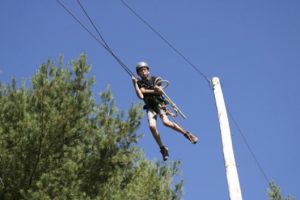 For the first time this year, Goshen had two Family Camps – one during Memorial Day Weekend and one during Labor Day Weekend. The inaugural Memorial Day Family Camp had good turnout for the new event. It was a little stormy, but campers crammed in fun in the sunny mornings at Aquatics and Shooting Sports and then, when the storms came in the afternoon, tried their hand at crafts in Handicraft. The event was popular enough that Goshen is happy to announce it will be offering Memorial Day Family Camp again in 2019!
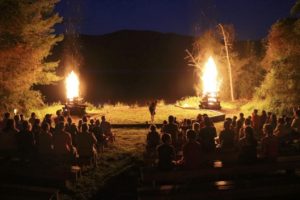 The newest aspect of Family Camp during the Labor Day Weekend was the return of the Saturday evening Square Dance. Way back in the day, the Square Dance was a staple of Family Camp, but it gradually faded away as there was no one who knew how to call. Lucky for Goshen, one of the current summer camp staff members, Lauren Brown, knows how to call from her off-season job at an outdoor school. She led much of the camp in square dancing and line dancing at Forster Hall. Everyone had a fantastic time and we’re looking forward to adding the Square Dance back in as a regular event at Goshen’s Family Camps.
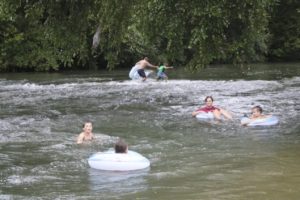 Miss out on the fun? Want to come back again? Join us for Family Camping fun in 2019. Goshen Family Camps will be offered Memorial Day Weekend (May 24-27, 2019) and Labor Day Weekend (August 30-September 2, 2019). The cost is $20 per person. Bring your own tent, bring your own food, and Goshen supplies the program. All ages are welcome. Registration is already open! Learn more and sign up at
 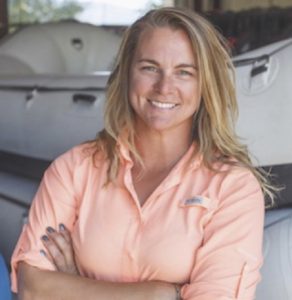 My name is Laura Kuras and I am the NCAC District Executive for our US Virgin Islands and Director of the local Boy Scout Camp here in St. Croix, Camp Howard M. Wall. I am extremely excited to be here in the USVI because it is such a beautiful location filled with amazing people who are ready and willing to bring Scouting back in to the community.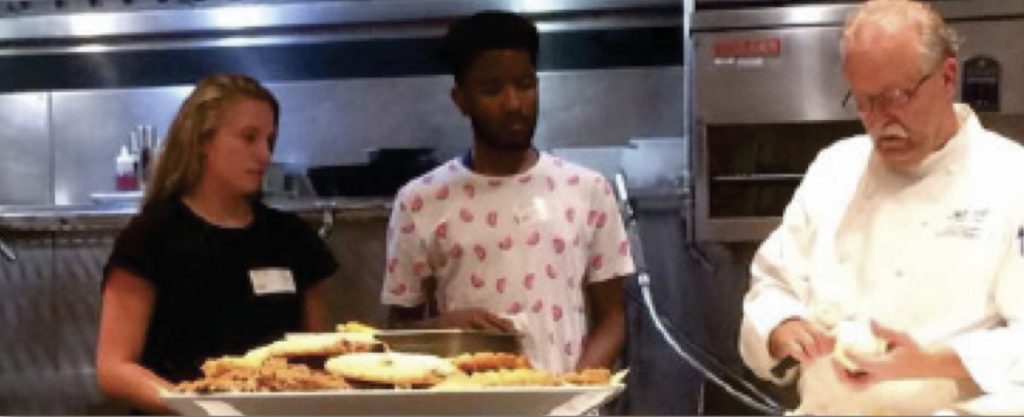
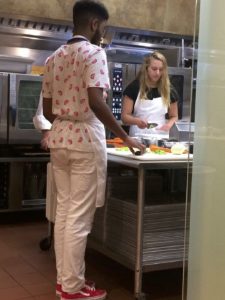 Upcoming topics and activities on the post’s agenda include: the Five Basic Cooking Techniques, Understanding “Sous Vide” Cooking Methods, Sustainable Seafood and Cooking Techniques, Understanding Nutrition and Healthy Easting, Environmental Impact of Cooking, two community service projects (Scouting for Food and cooking at a charity kitchen), visits to a farm or food vender, and a hotel visit. There will be a cook-off at the end of the year with the members cooking their favorite dish and serving it to the other members of the post.
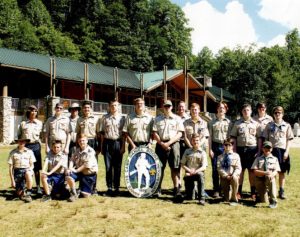 This summer 16 Scouts and 3 Scouters of Troop 26 (“26 KICKS!!”) experienced the North Carolina mountains in BSA’s Southern Region, Area 5, Daniel Boone Council. We were way back in the holler, about 15 miles from Asheville as the crow flies. The 8-hour drive from Stafford was well worth it for the variety of activities and the opportunity to visit Boonesboro Village for our older Scouts, not to mention the cooler, drier air of the mountains – getting out of the heat and humidity was, well, pretty cool! Not only did Scouts and Scouters alike learn to appreciate the refreshing frigid temperature of spring fed mountains streams, but several older Scouts also participated in the Boonesboro Village living history camp. There they honed skills essential to living in the 1770s such as hatchet throwing, black powder rifle shooting, blacksmithing and making their own clothes. Average temperatures were 20 degrees cooler than those of their lowland Scout brethren which made for very restful evenings – good sleepin’ weather. As an added bonus the Troop camped at the New River Trail State Park and toured the Jackson Ferry Shot Tower that manufactured lead shot (musket bullets) hundreds of years ago. Our Scouts found both locations so outstanding that they are in the rotation to be visited again.