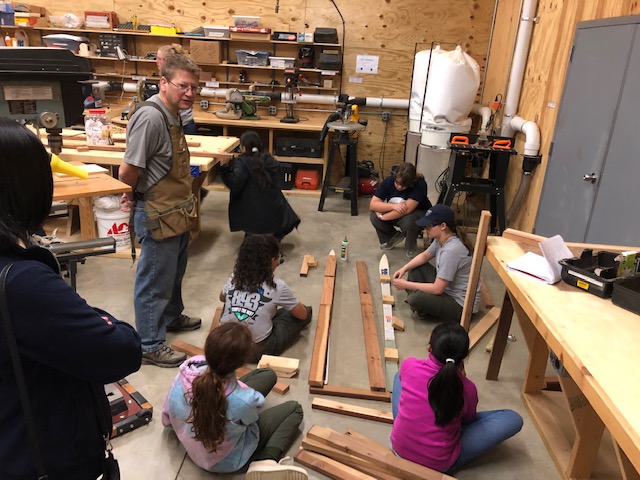
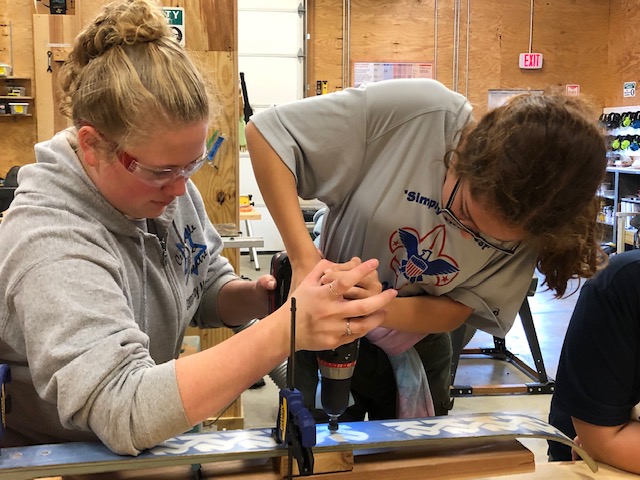
In preparation for their first Klondike Derby competition, Scouts from Troop 893G came out to Michael’s Woodshop to construct their sled. The Scouts received a safety briefing and were provided instruction and guidance from a volunteer Shop Steward as well as from fellow Scouts with prior woodworking experience. The Scouts were able to learn and apply many useful woodworking skills; measuring & marking, drilling, gluing and clamping. They demonstrated that “a Scout is Thrifty” by using reclaimed redwood from an old swing set to build their sled. They also displayed great teamwork and were able to work from their concept drawing and raw materials to a substantially completed sled in just a few hours.
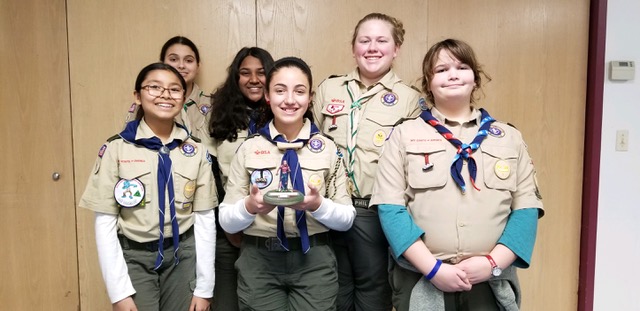
On January 18, the Troop competed in the Sully Distict Klondike Derby held at Camp Snyder. They had an impressive performance, taking second place in their first Klondike Derby competition. What an awesome team! Let their fellow competitors beware – Troop 893G already has their sights set on coming in first at next year’s event.
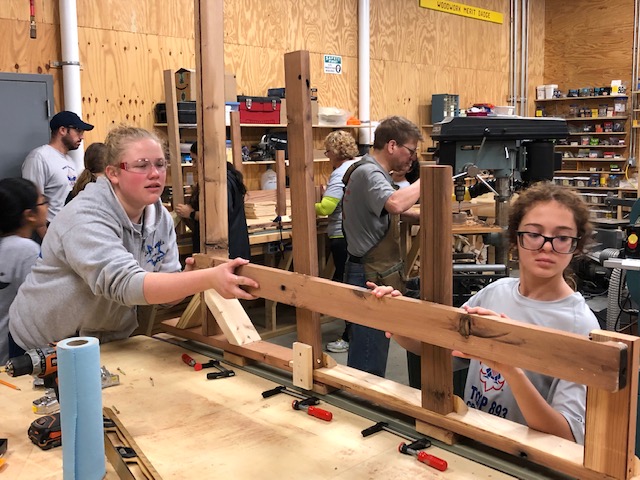
Looking for a great place to hold your own team building event? Michael’s Woodshop is a well-outfitted shop with the tools, equipment and plenty of work space for Scouts to create and learn. The shop may be reserved for Unit activities (all age groups), District events, Eagle Scout projects and other Scouting activities. Our volunteer Shop Stewards are all experienced woodworkers and are available to assist you in planning and carrying out a successful event.
For information about shop capabilities, upcoming events or reserving the shop, please visit the Michael’s Woodshop page on the Camp Snyder website. You may also email questions and requests to MichaelsWoodshop.CWBS@gmail.com
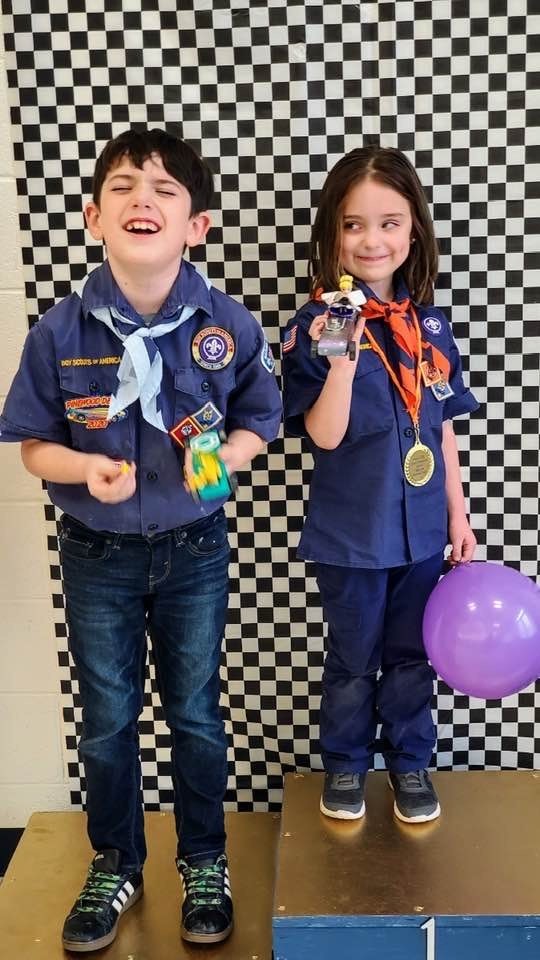
 Another Potomac District Klondike Derby is in the books. For Troop 447 from Rockville, Potomac District, this will be one to remember. Not for the heavy rain on Friday which soaked most of the tents and even some sleeping bags and clothes, not for the muddy field and falling temperatures, not for the close to freezing temperature on Saturday night, but for an entire year of preparing for this event paying off beyond expectation.

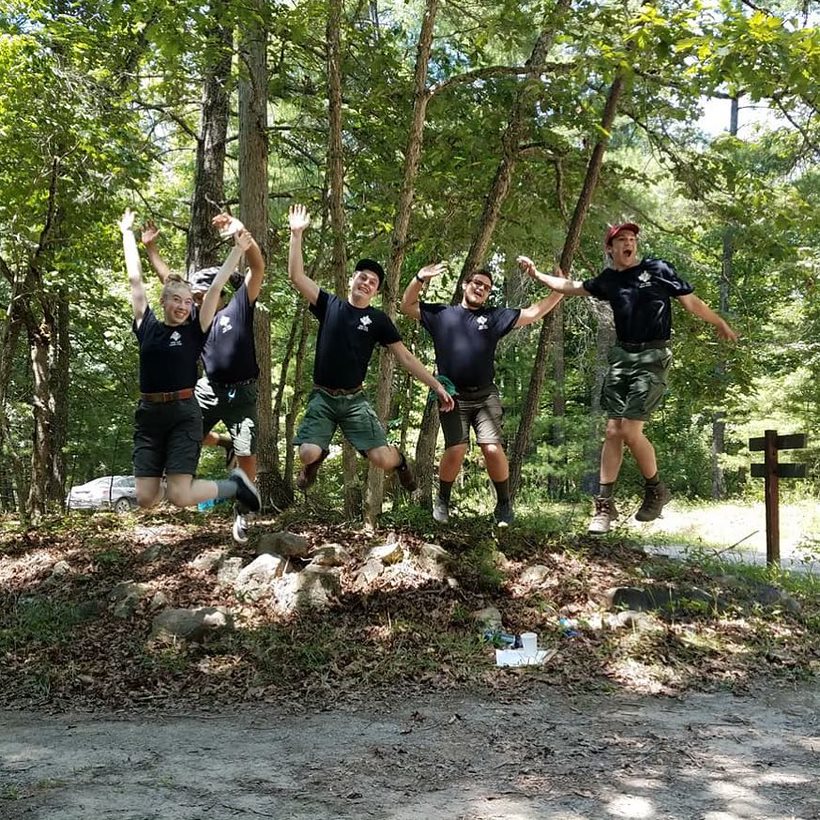
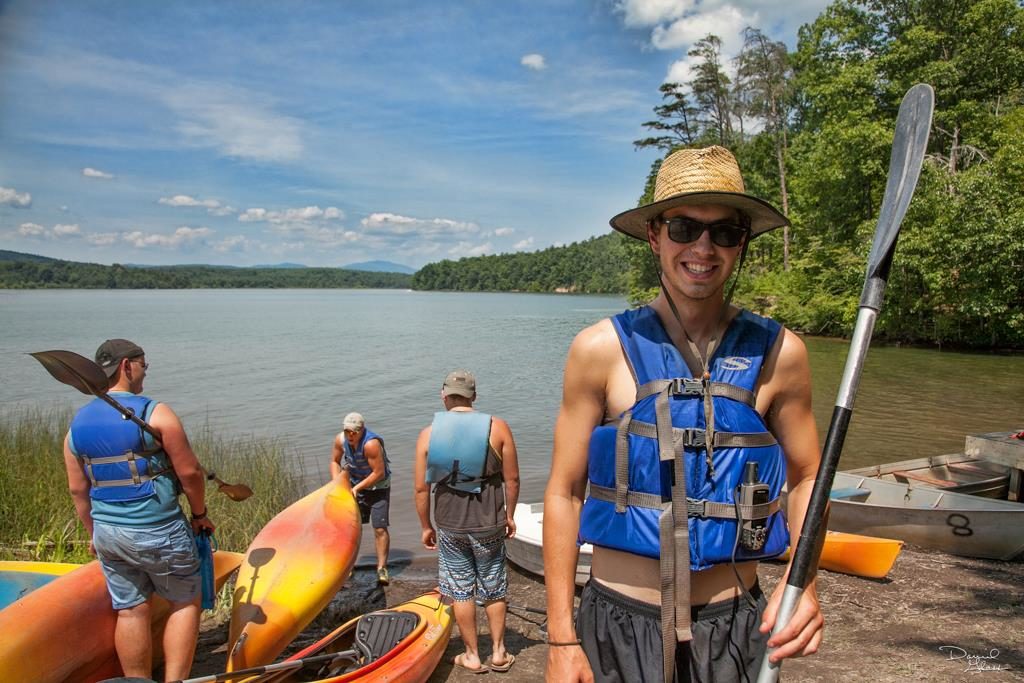 Apply to work at one of seven Goshen Scout Reservation Camps! Join our energetic and goofy staff at our Webelos Camps – Camp PMI and Camp Ross. Want to teach your favorite Merit Badge? Choose one of our three Scouts BSA/Venturing camps – Camp Bowman, Camp Olmsted, or Camp Marriott. Looking for adventure? Become part of our elite staff at Lenhok’sin High Adventure Base. Want to support camps in retail or in emergency medicine? Our administration camp – Camp Post – might be the place for you.
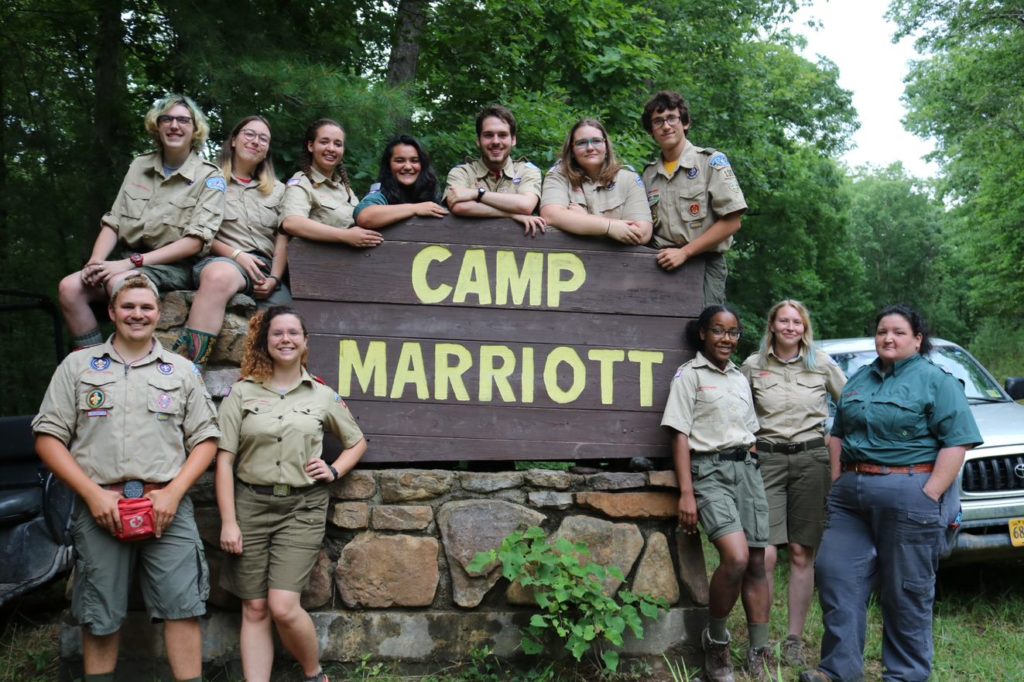 at Goshen’s Lenhok’sin High Adventure. Not yet 15? If you’re 14, you can be a Counselor-in-Training at any of our Cub Scout, Webelos, or Scouts BSA/Venturing Resident Camps. We’re also on the lookout for those 18 years of age or older to take on leadership positions.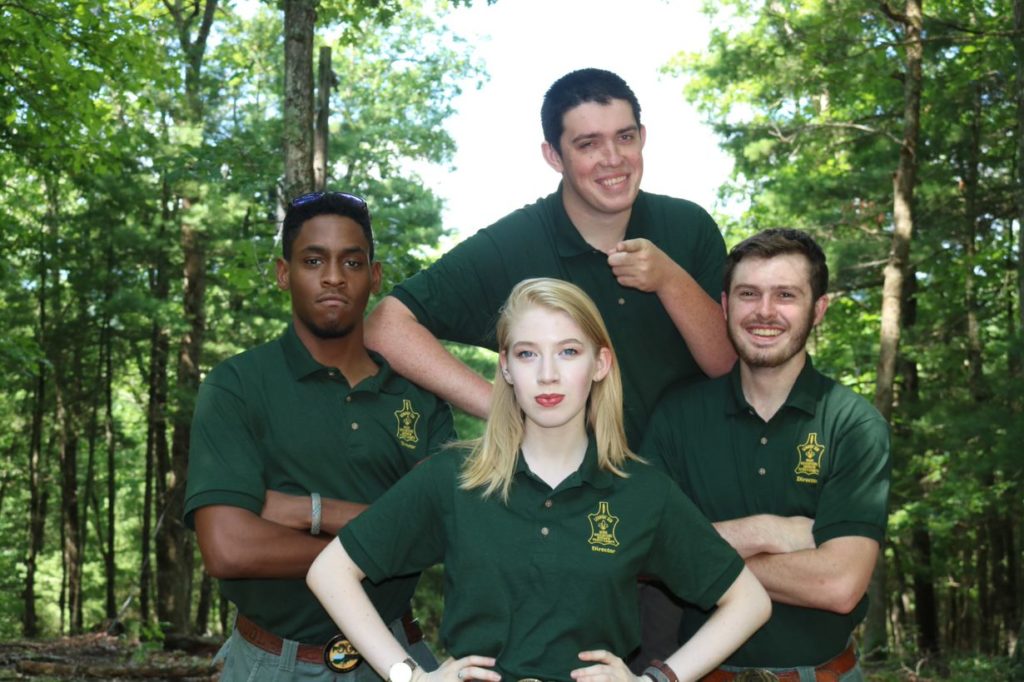
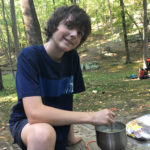 After summiting and exploring Mcafee Knob and Tinker Cliffs VA while backpacking the Appalachian Trail, Leo Eschenbrenner and Zumi Hersey from Troop 1203 set up camp at the Lambert Meadows Campsite.
 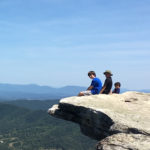 After Bob enjoyed his hot meal, Bob spoke to the boys about trail angles. Trail angles offer kindness to AT hikers and the kindnesses the boys offered to Bob was some magic that made his journey a little more special. We talked to Bob for seemed to be about 45 minutes and discussed his amazing experiences and the people he had come to meet along the way. Bob departed before sunset with the goal of seeing the sunset from Tinker Cliffs. Leo spoke about Bob and the friendship they shared over his trail angle hot meal.