

Congratulations to the 11 new Eagle Scouts from the Potomac District and their proud families.
Thank you to everyone who assisted these Life Scouts along their journey to reach the Eagle rank.


Congratulations to the 11 new Eagle Scouts from the Potomac District and their proud families.
Thank you to everyone who assisted these Life Scouts along their journey to reach the Eagle rank.
 Life Scout Lance W. of Troop 1831, Accotink Bay District, recently led the primary service event for his Eagle Scout project at the Dumfries Slave & Free African American Cemetery in Dumfries, Virginia.
Held on Saturday, June 20, during Juneteenth weekend, the cemetery maintenance and cleanup event was conducted in partnership with the Friends of Dumfries Slave Cemetery. Volunteers from Troop 1831 and the surrounding community worked together to clear overgrowth, remove debris, and help restore the grounds of the historic cemetery.
The Dumfries Slave & Free African American Cemetery is the resting place of enslaved and free African Americans. According to Lance, “the timing of the project during Juneteenth weekend made the day especially meaningful”.
The project brought Scouts and community members together in service to help preserve an important historic site while supporting Lance’s journey toward earning the rank of Eagle Scout.

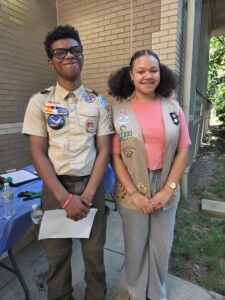
 Community service and support for first responders were at the heart of a successful Eagle Scout project completed by Troop 544 in Washington, D.C.
On Saturday, May 30, 2026, Troop 544 member Jaron completed his Eagle Scout project at DC Fire and EMS Engine 24. Located in the Petworth neighborhood of Northwest Washington, D.C., the station is part of the District of Columbia Fire and Emergency Medical Services Department and serves the surrounding community.
 The day began with Troop 544 officially raising the flag at the fire station.
Explaining the purpose of the project, Jaron said, “I planned this painting and planting event to support neighborhood first responders.”
Jaron’s beautification project focused on improving the appearance of the station for both firefighters and community members. Volunteers repainted the handrails on the station’s ADA-compliant ramp and staircase and planted new flowers and greenery around the property.
When asked why he selected Engine 24 for his Eagle Scout project, Jaron explained, “I chose Engine 24 because it looked like it needed help.”
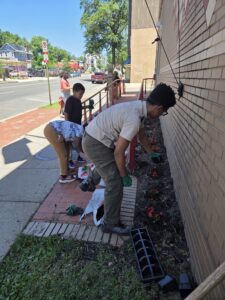 The project drew strong support from firefighters, Troop 544 members, mentors, and local residents who came together to help complete the work.
Captain Mike Bozarth of Rescue Squad 2 expressed his appreciation for the effort, saying, “We’re really grateful that Jaron thought of us when he was deciding where to do his Eagle Scout project. We’re happy to be involved.”
Kevin Magby, an Eagle Scout and mentor, praised Jaron’s commitment to service and leadership.
“I want to keep Jaron encouraged because he’s doing a great job,” Magby said. “Young men like himself need to be showcased more as doing the right thing. We see a lot of negative things in the media. We want to showcase the positive aspects.”
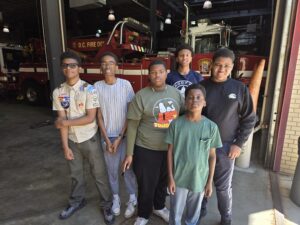 The completed improvements will provide lasting benefits for the firefighters who work at Engine 24 and Rescue Squad 2, as well as the residents they serve. The success of the project highlights the positive impact that Scouting, community partnerships, and volunteer service can have in strengthening neighborhoods and supporting local first responders.
Manav G. of Troop 1983 grew up in India. There he saw extreme poverty first-hand, with families begging in the street to feed their children, and the daily struggles of the people were impoverished. As a result, when he moved to America at age 9, Manav was struck by the luxuries and privileges that many Americans took for granted.
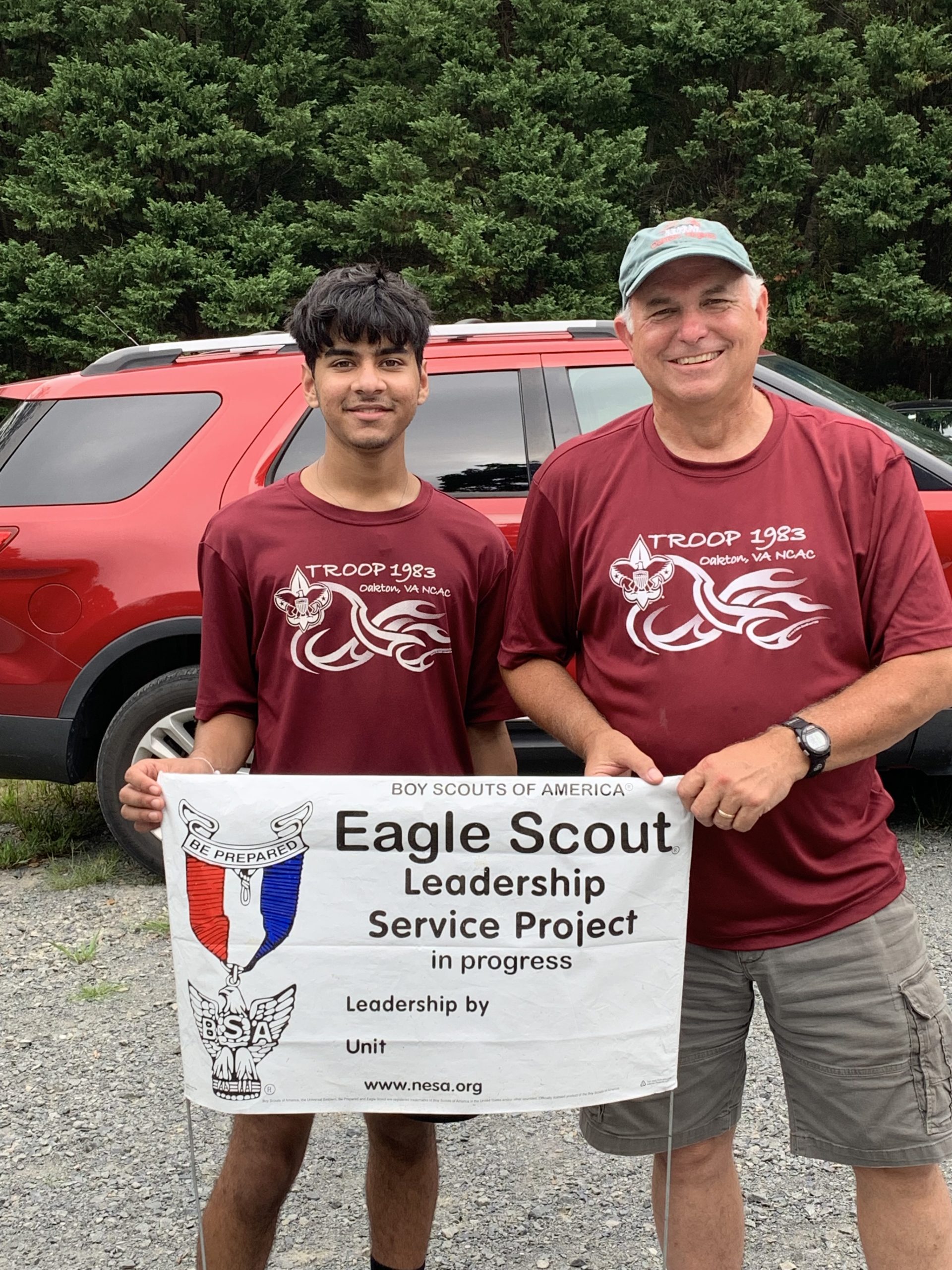
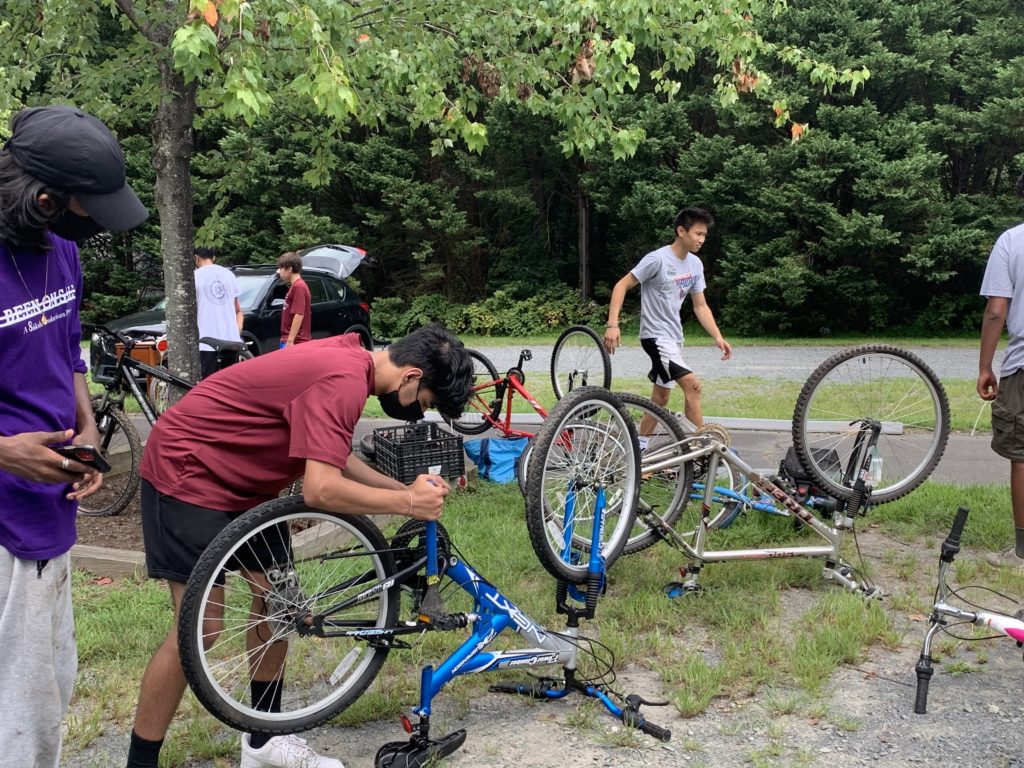
When he joined Scouts BSA to find a community and friends in his new hometown, Manav immediately latched on to the Scouting message of giving back to and raising up others. His dedication extended even to his favorite merit badge, Citizenship in the World, which allowed him to, in his eyes, “see my impact and the ways I can make the world a better place and help, even as a 13 or 15-year-old kid.” So when the time came for his Eagle Project, Manav knew he wanted something that gave back globally. So he collaborated to create a Bike Drive with Bikes For The World. This leading non-profit organization collects unwanted bikes from across America to supply community development programs in impoverished areas of developing nations. The bikes he collected would be destined for Sierra Leone, where children would use them for recreation and adults for their business and travel.
Manav spent the eight days leading up to the bike drive in a focused marketing mode. Worried that, even in a city, there were only so many people with bikes and fewer willing to donate, Manav ensured that his project would reach a broad audience. He combined online social media postings with paper fliers put up in key locations around the city. He also contacted local churches, attended online meetings, and went in person to speak wherever he could. Though the Scout wished he had even more time to continue raising awareness, Manav’s efforts had paid off when the day of the drive came.
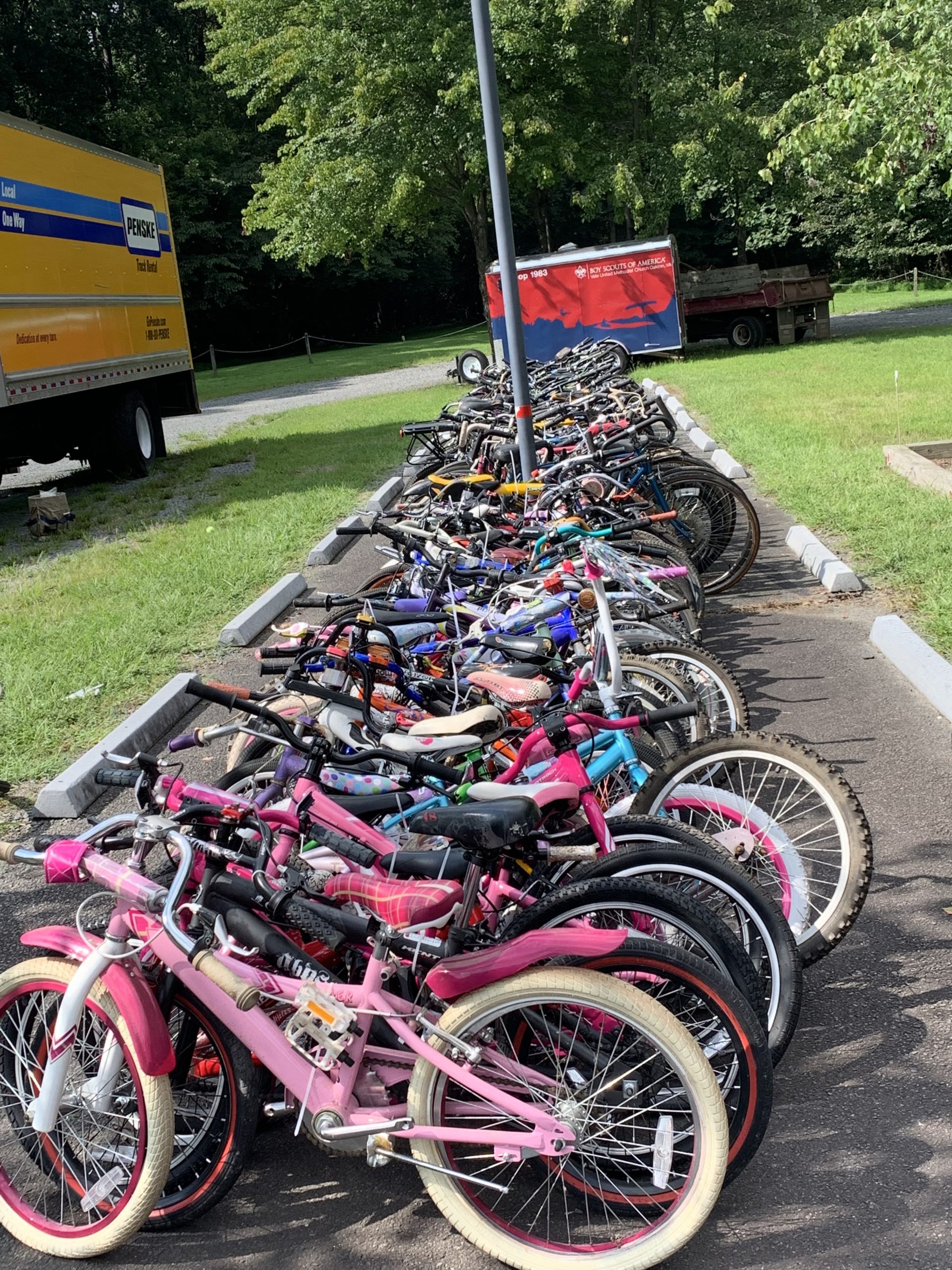
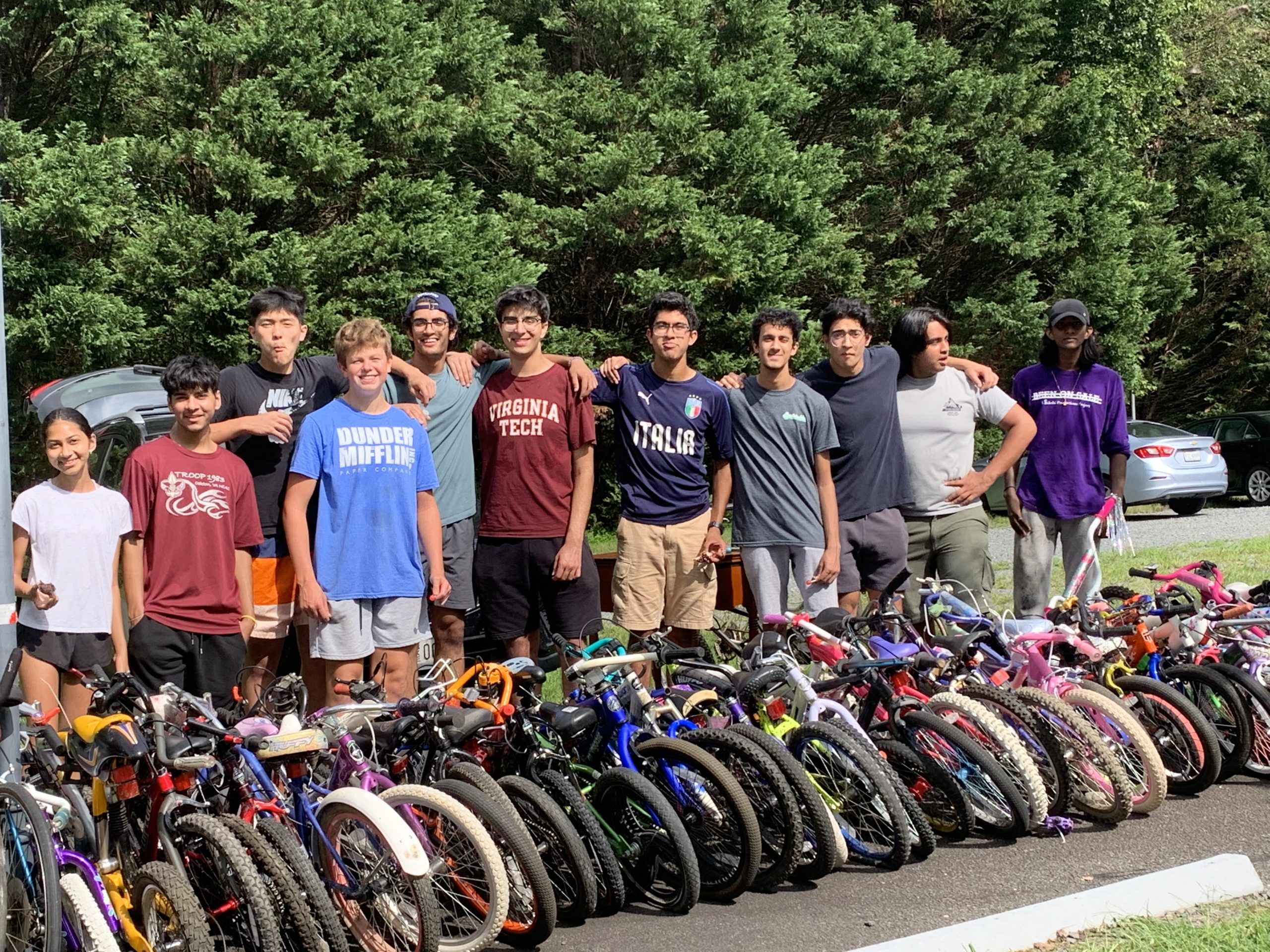
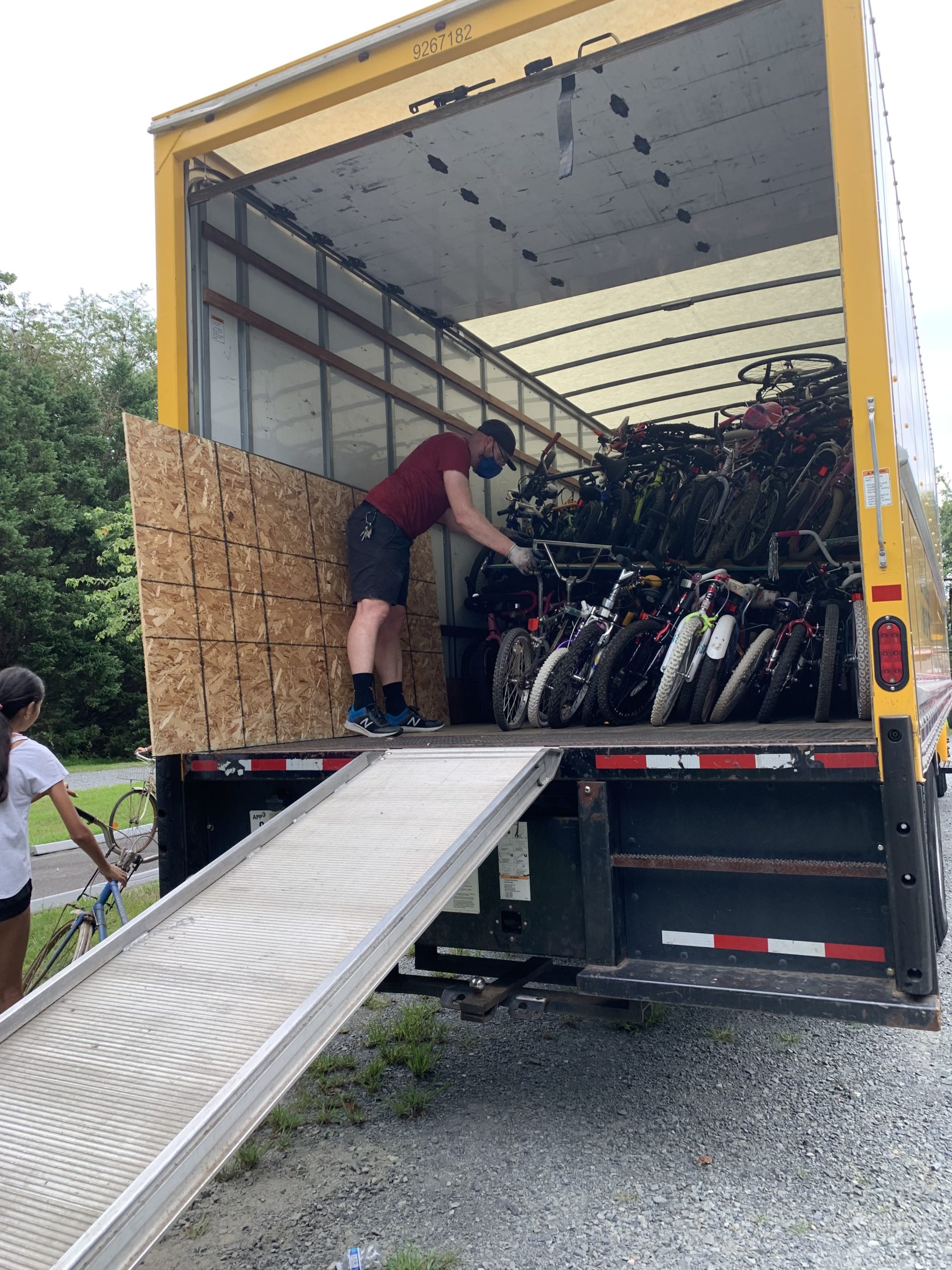
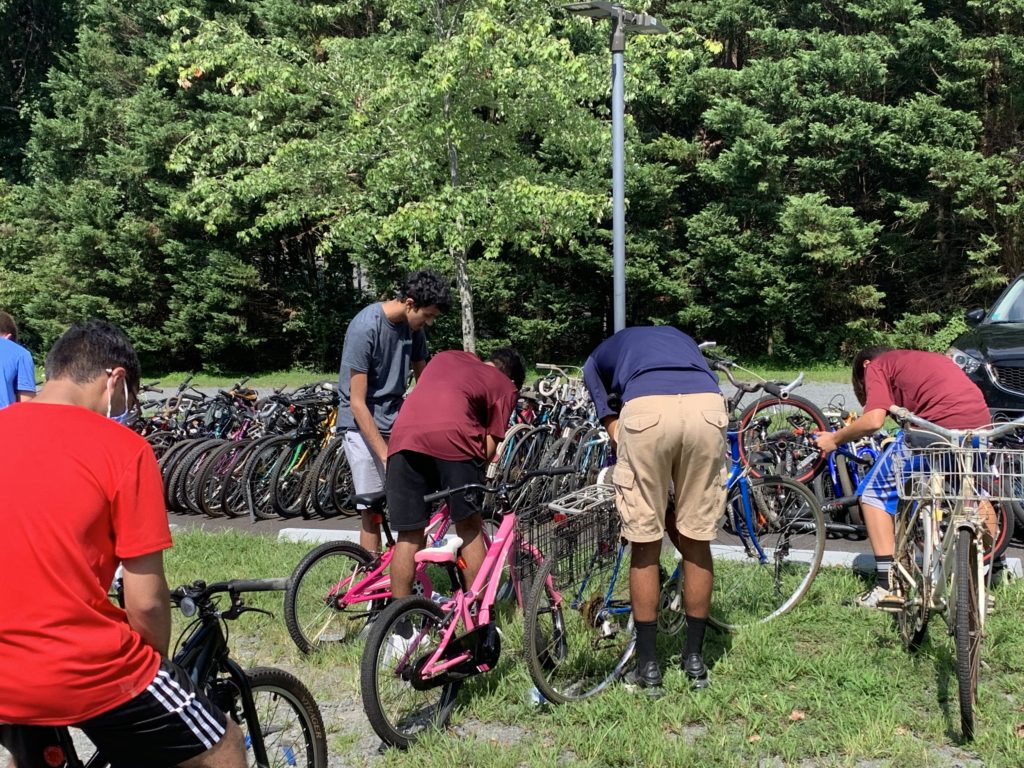
Despite his worries about the short marketing period, Manav’s drive was an overwhelming success. Like clockwork, as bikes came in, Manav’s team would quickly offload and begin dismantling them to make it cheaper and easier to transport them abroad. The team would then load the dismantled bikes onto trucks headed for the Bikes of the World headquarters. Such was the massive amount of bikes collected that, at one point, the Scout remembered they covered more than two entire parking spots. With 168 bikes collected, Manav’s project had blown past his troop’s prior record, beating the previous highest bike drive by over 60 bikes.
Though his project has concluded, Manav remains dedicated to helping others worldwide. Manav holds monthly bake sales for the AURED Trust, which supplies hearing aids to hearing-impaired children throughout India. He is also currently interning with an organization dedicated to providing free vaccinations throughout rural America. He plans to study business in college and use his studies to find an intersection between finance and conservation.
Manav urges Scouts to “make the push to Eagle. It’s so worth it. When you look back, it will be such a learning experience and it will be so worth it. There are always going to be things you don’t expect, but try to work around that, and you’ll find all the fun you have with it.”
 From the moment he joined Cub Scouts, Colton M. of Troop 162, Arlington, VA, knew that he wished to be an Eagle Scout. To him, that meant “Someone who lives by the Scout oath and law, is a leader, good at helping people, and making sure things happen on time and well. Someone who you can depend upon.” When he crossed the bridge into Scouts BSA, he moved quickly to make it a reality. In two years, he made it to Life and now, at just 13, has completed his Eagle Project.
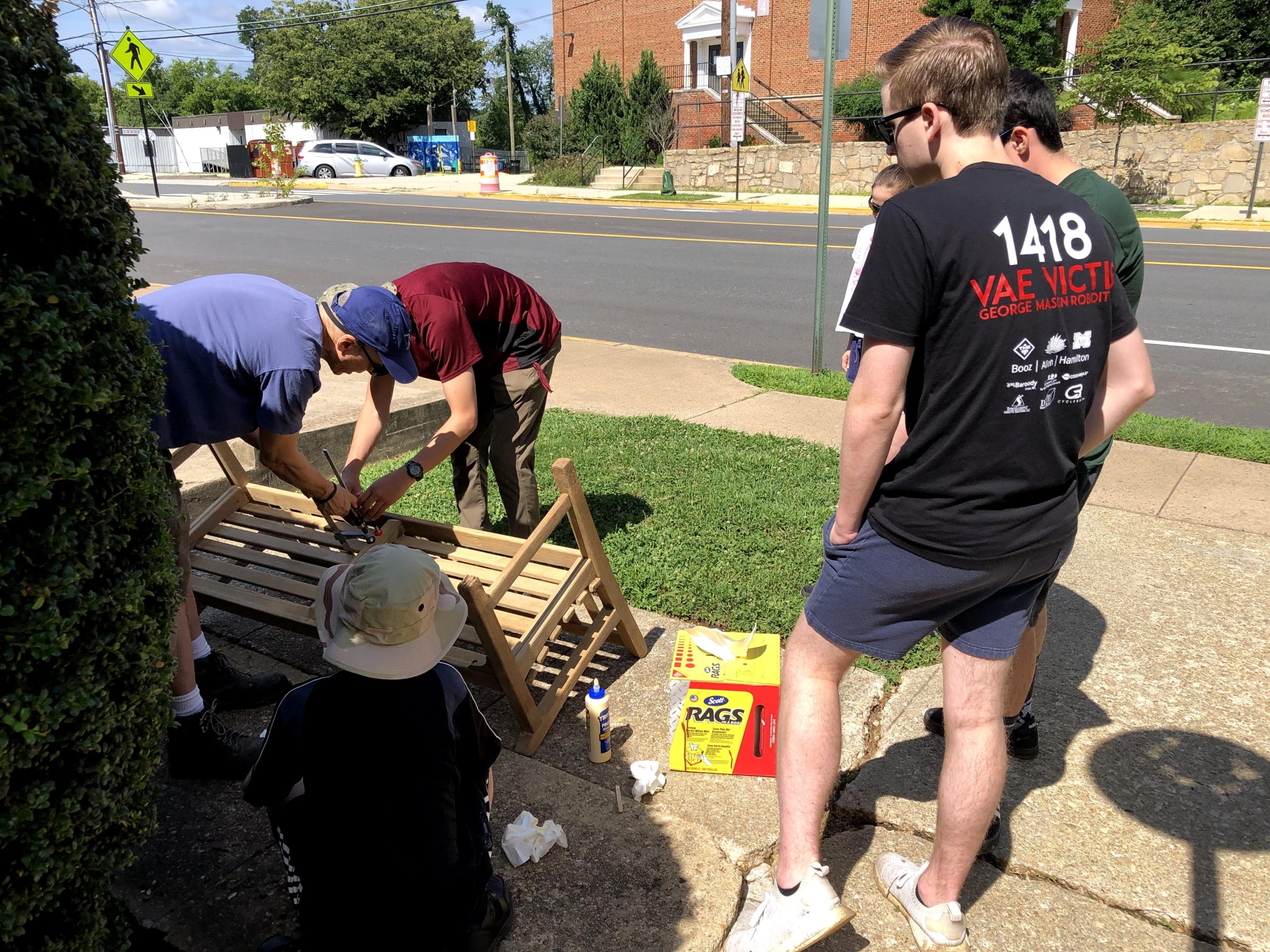
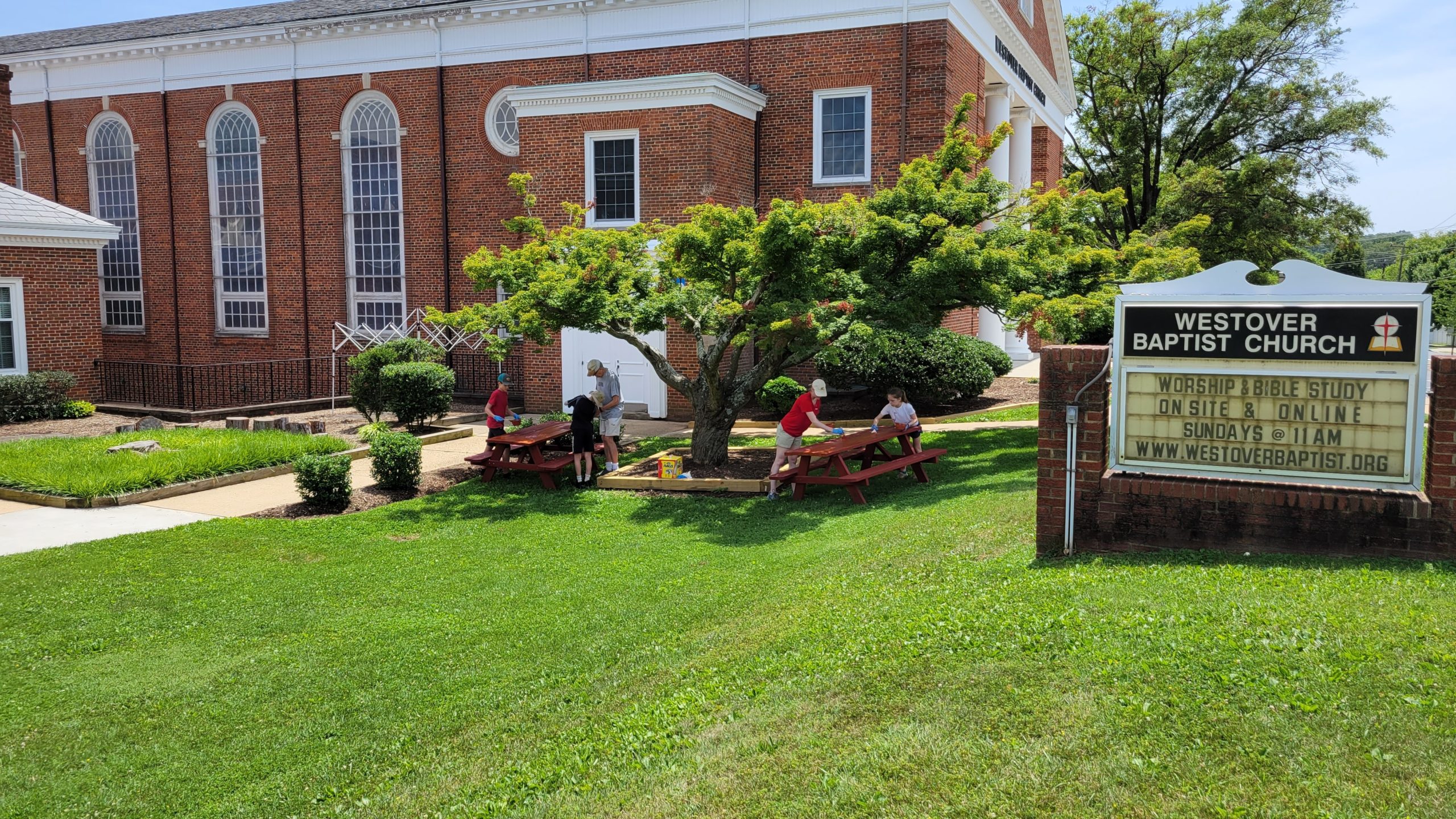
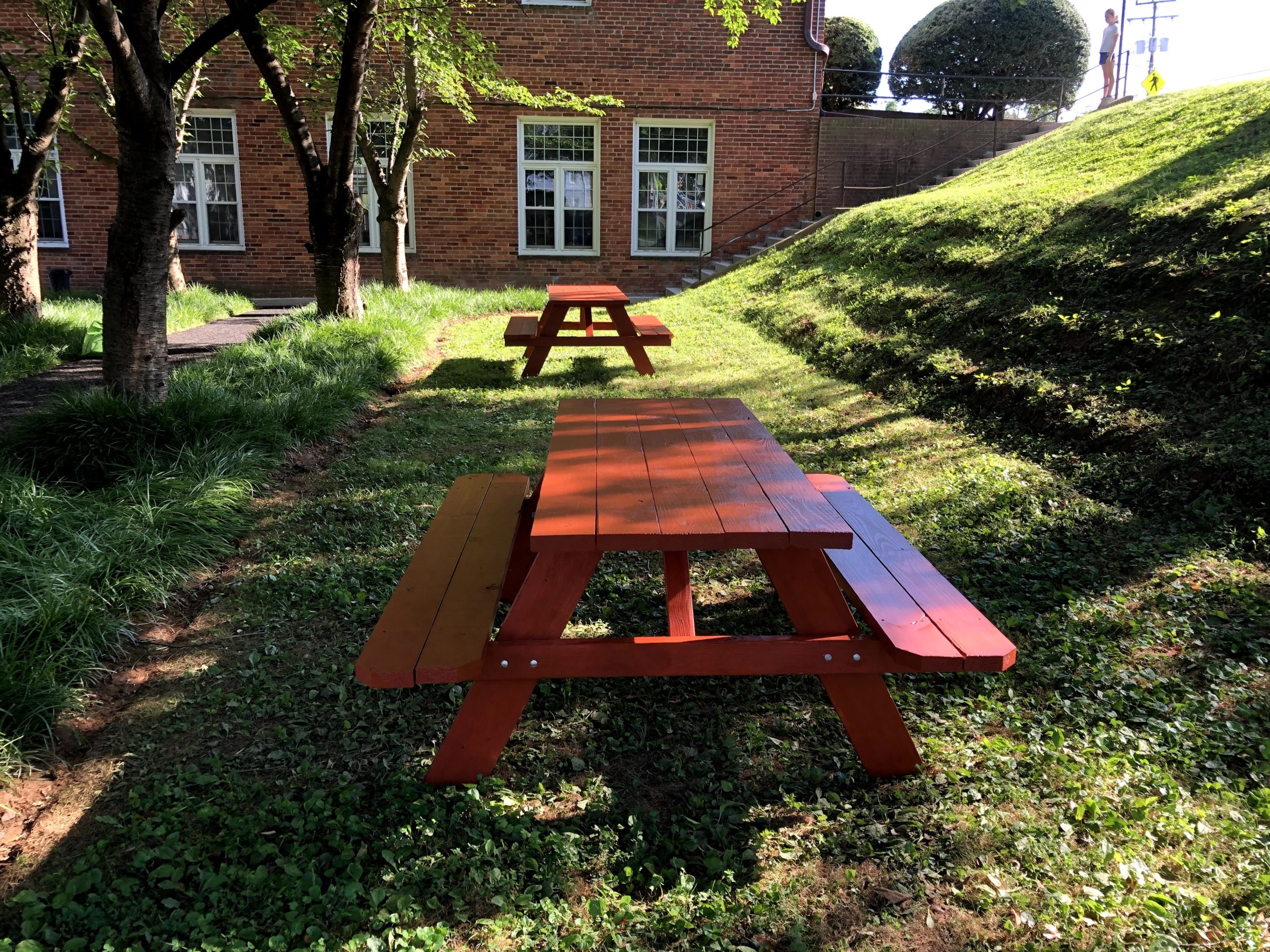
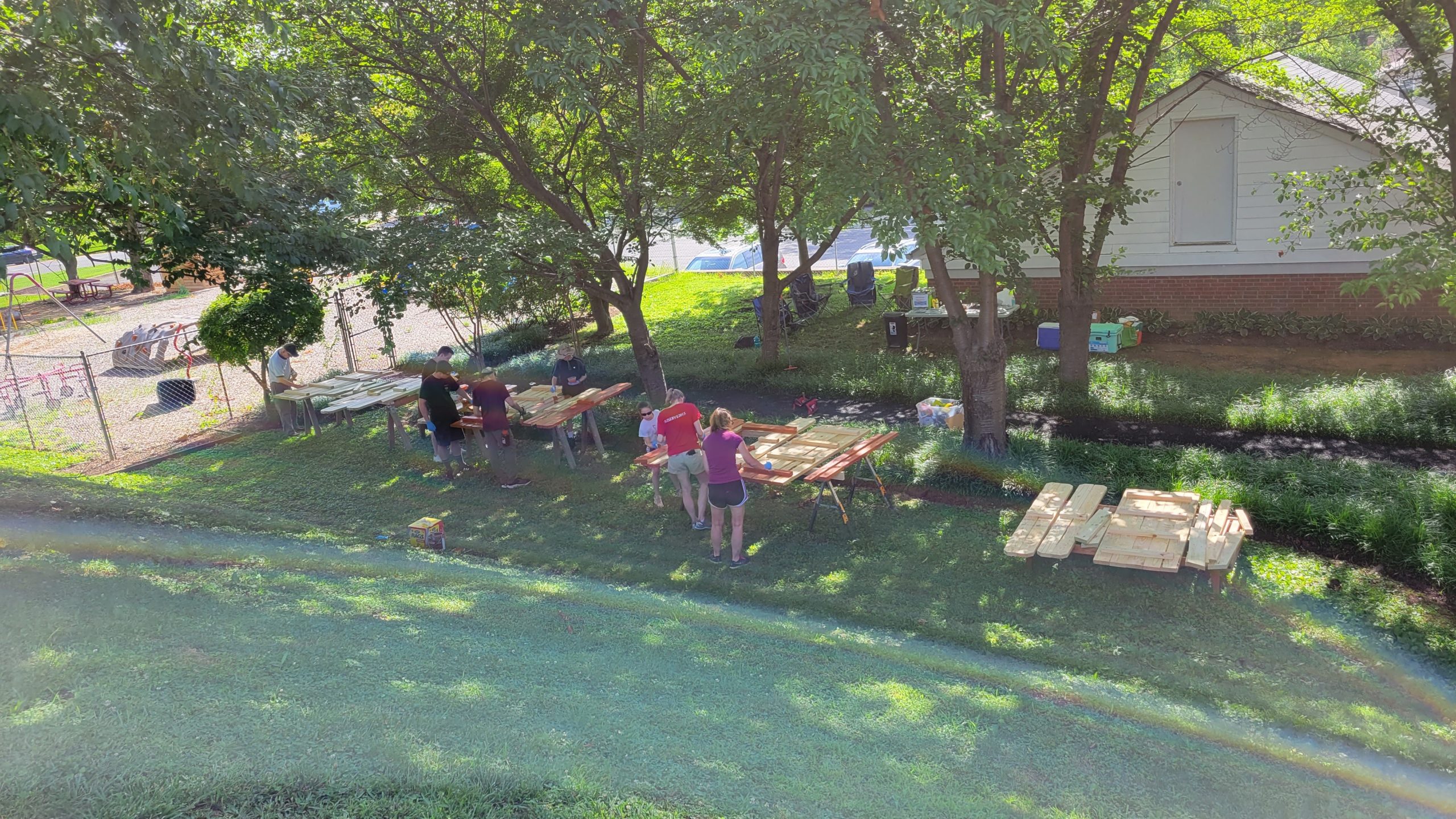 For his Eagle Project, Colton worked with Westover Baptist Church after he noticed their preschool playground was greatly in need of restoration. The playground’s picnic tables and lawn bench were in a state of disrepair, to the point that the Church’s local pastor feared that the picnic tables would need to be replaced in their entirety, and the lawn bench (the pastor’s favorite) would need to be thrown out. Working with his fellow Scouts, Colton was able to refurbish two of the picnic tables and build four more from scratch, perhaps most importantly, the Scout was able to save the lawn bench. Seeing Colton’s success in saving something he had thought unsalvageable, the pastor was “flabbergasted” and inspired to dedicate a sermon to the project and the restoration.
Throughout the process, Colton employed the leadership and time management skills Scouting had instilled in him. Though initially, he was, in his own words “overbearing,” Colton soon realized that a leader didn’t need to be everywhere and command everyone. This allowed him to step back and delegate tasks. Spacing out activities created ample time for both breaks and improvisation, so that when the Scout faced difficulties like an unexpected break in the wood of the lawn bench, they had the capacity to manage a solution.
Colton is now looking at high school options and hopes to find a school that offers a robust 3D-modeling program and a strong STEM field specialization, especially in engineering. For now, he spends his time working with his own 3D printer and in his father’s woodshop, where he creates all manner of projects, “turning what’s in my head into real life in just a few hours.”
To all Scouts looking to be Eagles, Colton advises, “take a deep breath and plan everything. Don’t rush into it. Make sure everything is planned out properly. Check over every detail, think about every detail, and make sure everything will come out right. Then when you are executing what you planned, everything will come out nicely, and you’ll save yourself a lot of time.” 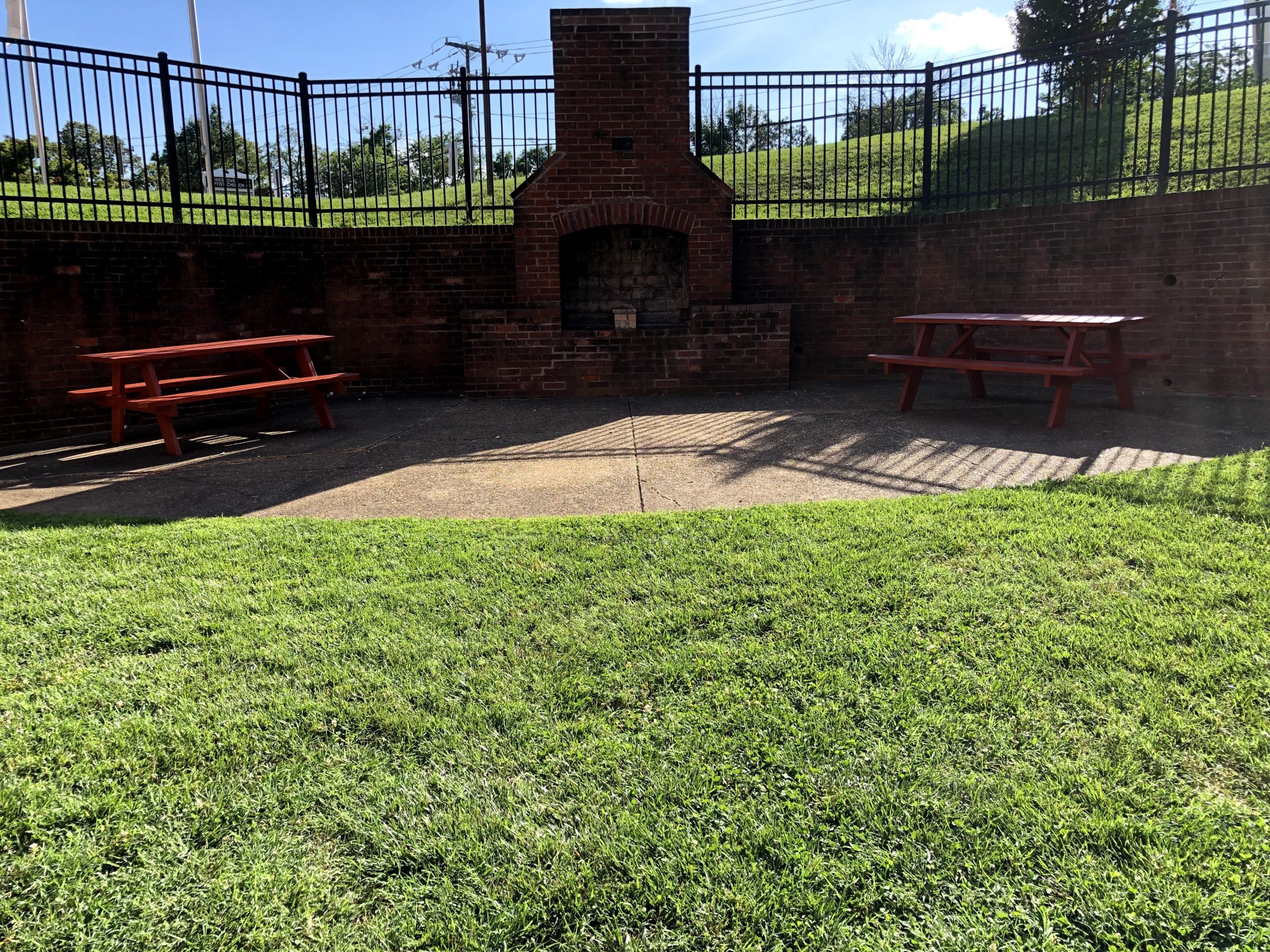
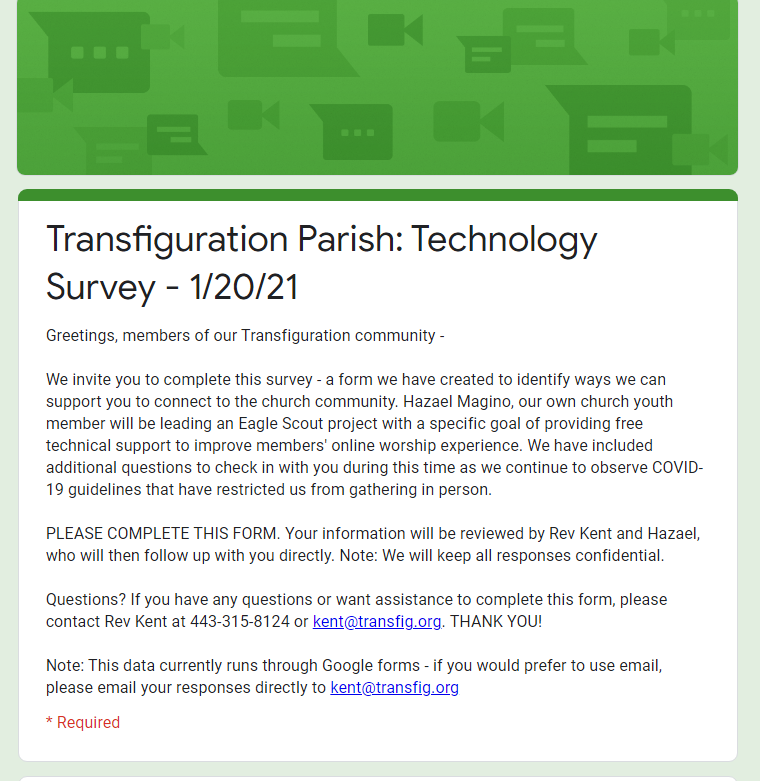
Life Scout Hazael M. of Troop 1444 noticed a sudden drop in attendance at his church following the shift from physical meetings to virtual during the pandemic; concerned, he resolved to find out why. Hazael emailed a survey to all regular attendees; what he found was that many members of his church, especially the seniors to which it typically catered, felt uncomfortable with the new technology and didn’t know how to use programs like Zoom to access the sermons. Hazael decided to use his Eagle Project to address this problem and rallied both his church and volunteers to help seniors develop technological literacy.
Hazael recognized that many older parishioners lacked the necessary digital devices and sought help from his community, successfully obtaining two computers to donate to seniors in need. Hazael then organized educational events in conjunction with his church; these were held on Zoom to encourage people in their first steps with the program. This training also allowed people to call into the Zoom Room via phone if they still felt uncomfortable with the application. Hazael created online presentations demonstrating to seniors the do’s and don’ts of Zoom, online communication, and several other key digital programs, and set up breakout rooms where helpers could walk seniors through the technology.
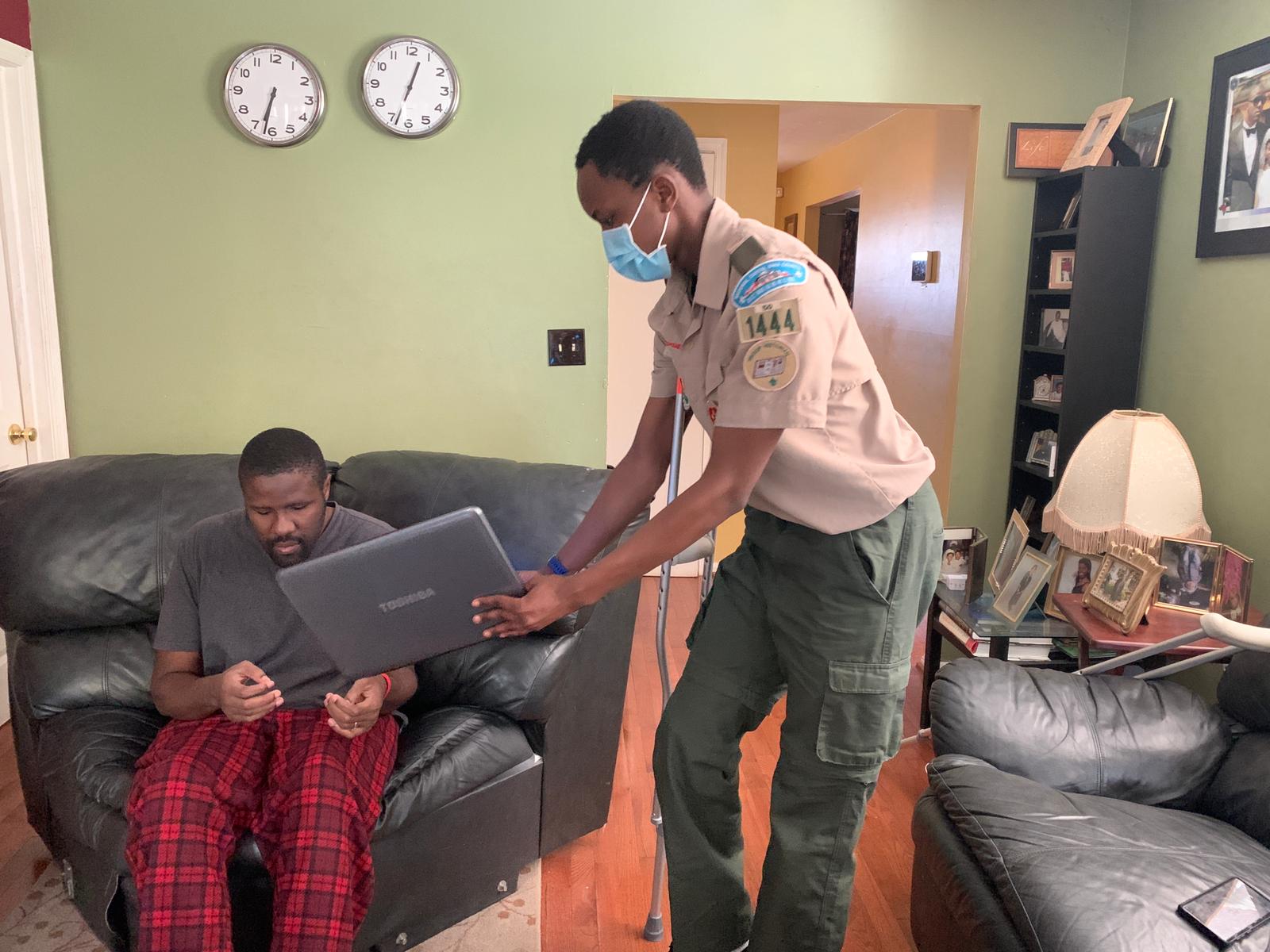
When Hazael learned one particular active and outgoing member of his church couldn’t attend the sessions due to extreme visual impairments that prevented him from using Zoom rooms or even seeing his computer screen, the Scout took a more hands-on approach. Hazael brought one of the donated computers to the parishioner’s house and worked with him personally to activate the accessibility features on his computer and walk him through the digital processes.
Hazael’s project was well-received by the church members; as he recalls, “The best part was, after the training, when they left the breakout room they’d come to me. They’d say “Thank you Hazael” or “This was really helpful.” They said I should share it with other churches and do it in other places where I could. It felt really great to be appreciated.”
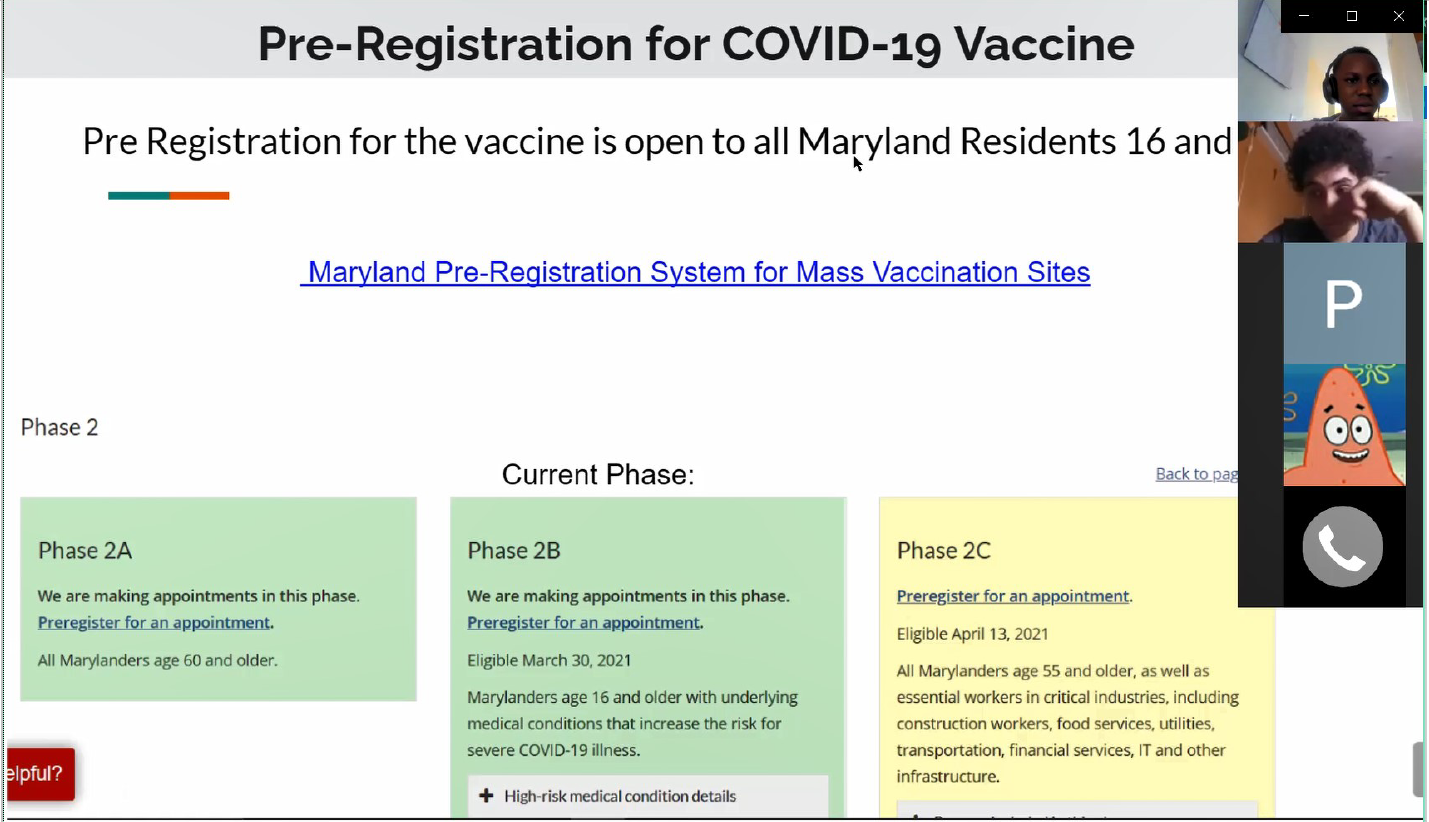
Wanting to further maximize his project’s impact, Hazael used his project to promote the community’s ongoing vaccination efforts: as seniors were walked through the process of online communications, volunteers would also assist them in registering to receive the COVID-19 vaccine, finding locations with open availability and guiding them through the process of signing up.
To all Scouts thinking about their path to Eagle Scout, Hazael offers this advice: “Make sure you’re really determined and upfront in what you want to do and how you want to do it. If you’re not the most confident in what you want to do, or interested in, you won’t really have the motivation to carry through. You don’t want to stop halfway through and change your ideas.”