
I have been volunteering with Operation Hood for the past few years. Operation Hood helps feral cats; I was initially drawn to them because of my love for cats. So when looking for ideas for my Eagle Scout Project, I decided to help Operation Hood by making cat houses.
I originally had the idea in March, but due to COVID-19, I couldn’t begin until mid-July. During that time, I decided to reuse some old cat houses my grandfather had in storage rather than start from scratch. We also converted old dog boxes that needed to be cleaned, sanitized, and painted. After about three days of hard work transferring the cat houses to my house and then to Operation Hood, I finally could start the project. The hardest part of the project was working around the weather. Everything was planned out, but unfortunately, it began to rain a lot, like every weekend. We had to work around it. Eventually, we had to bring out canopies so we could start working on putting the fronts on the houses, staining the houses, and building the cat tree. Then we had to postpone painting the wooden ramps until the following weekend due to the rain.
This project was harder than I thought it would be. I had to figure out how to relay the ideas that I had on paper and in my head to my Scout volunteers. The project helped me with my leadership, planning, and communication skills. I also learned to plan for anything, especially the weather. During this project, some of our wood was cut wrong as well, so we had to adjust our plans slightly.
I found my favorite aspect of the project was giving back to an organization that I truly believe in. They are doing such great work and care so much for the cats. It was a wonderful feeling seeing (within 5 minutes of completing the project) cats utilizing what we just built. It made the project worth it.
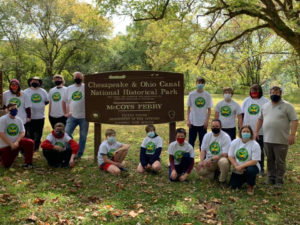 On the weekend of October 9-11, 2020 Troop 1550 camped at McCoys Ferry Campground (a National Park Campground) that’s located along the C & O Canal National Historical Park.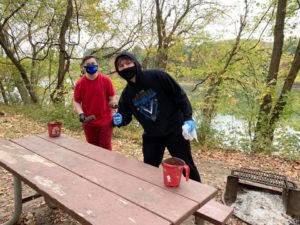
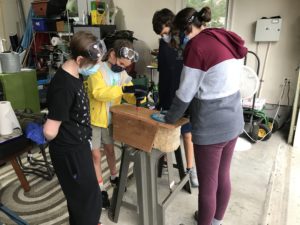 Scouts from Ashburn’s Boy Troop 997 and Leesburg’s Girl Troop 998 joined together on a conservation mission for screech owls, organized by a Troop 997 Life Scout. The Scouts have spent the last week honing their woodworking skills building screech owl nesting boxes. The Eastern screech owl is not an endangered species, but its habitat is in decline, particularly in Virginia and the Northeast. Screech owls often resort to nesting in old woodpecker holes, but nesting boxes placed high in woodland trees keep the owls and owlets safe from predators like snakes, racoons and larger owls and other raptors.
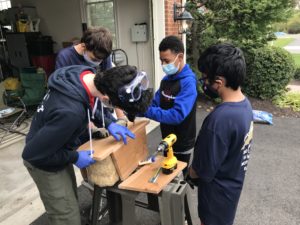 Eagle projects centering on building duck nesting tubes, bat boxes, duck feeders and bluebird boxes. Ian P. decided to focus on owls by building screech owl nesting boxes. He teamed up with Camp Highroad in Middleburg, a stellar United Methodist Church camp that has campsites frequently used by area Troops and Packs, as well as for leader training. Ian recruited Scouts from Troops 997 and 998G to build the nesting boxes, identified locations with the Highroads team, and will soon lead a team to mount them in likely nesting areas around the Camp. He built an extra nesting box and created a screech owl guide for the Camp’s nature education program. The guide includes information about the owls, the project, the installation locations around camp and instructions on annual maintenance.
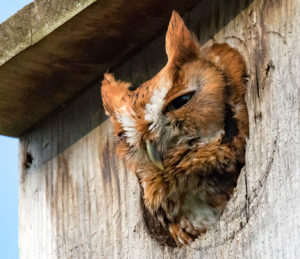 Ian invited his sister Riley, a Star Scout and one of the founding members of Leesburg’s Scouts BSA Girl Troop 998, and her fellow Scouts to participate as well. They learned about the wildlife conservation and educational mission of the project, then received hands-on training with woodworking tools and methods. With over 80% of the Troop participating, the girls have taken what they’ve learned and accomplished, and completed the application material for the prestigious Hornaday Unit Award.
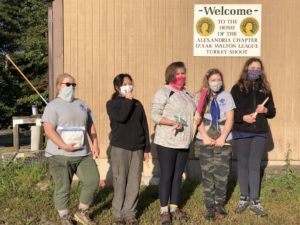 The Founder of Scouting, Lord Baden-Powell said: “God has given us a world to live in that is full of beauties and wonders… if only we have the sense to look at them in that light.” The Scouts BSA Outdoor Code tells Scouts “To be Conservation Minded.”
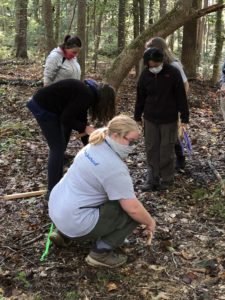 This project was important because, although the Pawpaw and Persimmon are fruit trees native to Virginia, they cannot thrive on their own. Pawpaw trees require pollination from an unrelated tree to bear fruit. Persimmon trees generally need a male tree to pollinate a female tree to produce fruit. These factors, combined with the large seeds that are not eaten and spread by animals, hinder fruit bearing Pawpaw and Persimmon groves.
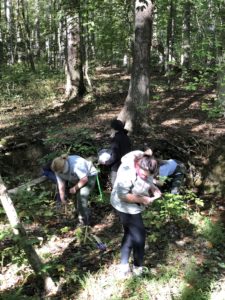 While this was Troop 840 Girls first Conservation Project, the Scouts have conducted several community focused Service Projects. These included projects for our Nation’s Veterans in conjunction with Vets on Track, which furnishes/decorates homes with essentials and comfort items for homeless Veterans “Making Houses into Homes” and Black Horse Forge which provides free metal forging classes and forging facilities for Veterans; Black Horse Forge is planning to expand into woodworking too and also has horses, donkeys and chickens for visiting Vets to caretake. Additionally, Troop 840G Scouts have participated in the National Night Out opening ceremony and Scouting for Food.