STEM Speaker Series is an online event for youth to hear from and engage with STEM professionals. Created by the NCAC STEM Committee, this Series has been running since May 2020 on Thursday evenings, and has since welcomed dozens of STEM experts to share career talks.
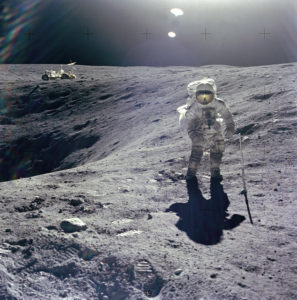
We hosted a medical physicist, statistician, USCG pilot, nuclear scientist, veterinarian, pathologist… and now we are excited to welcome an astronaut on March 18th!
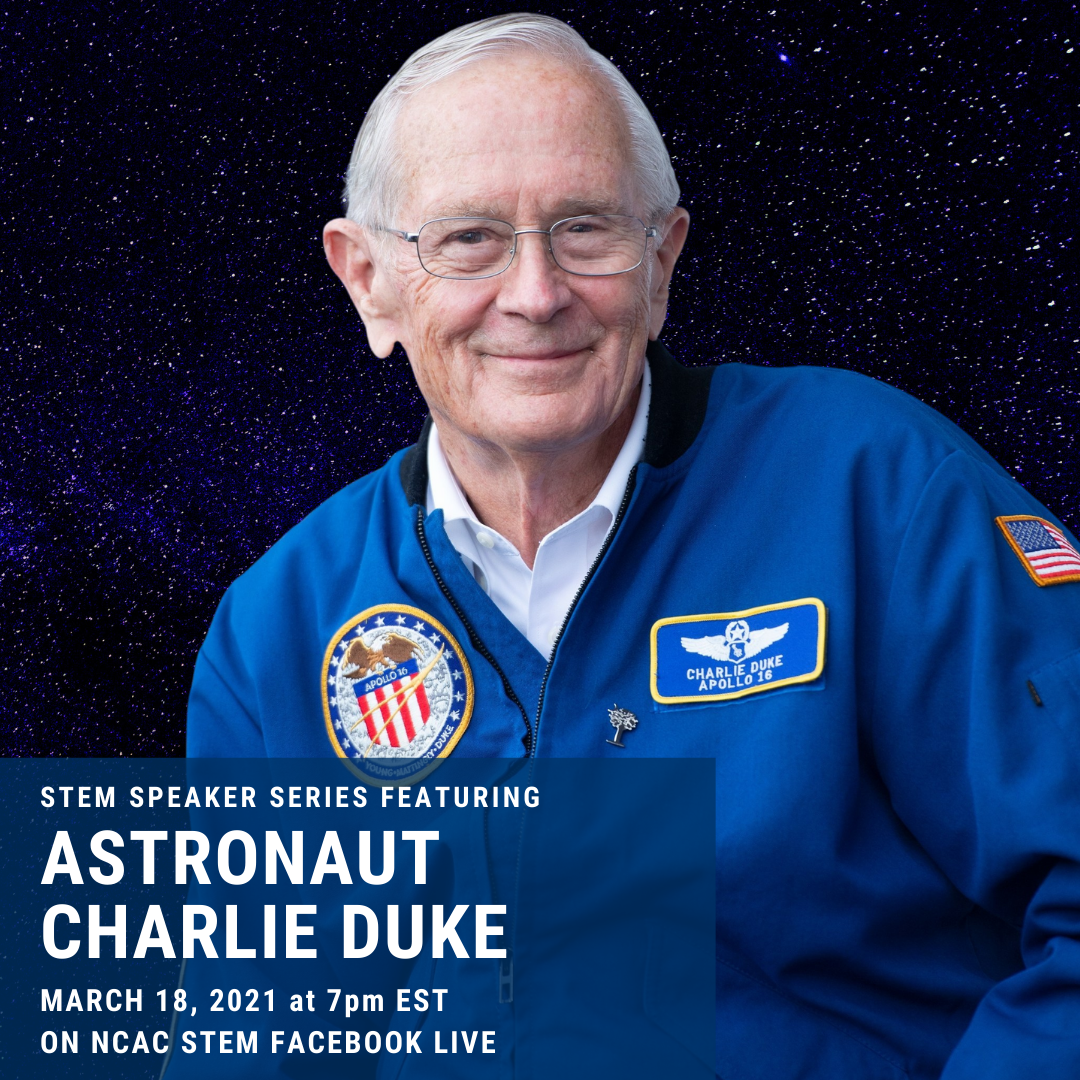
Join us LIVE for STEM Speaker Series with Astronaut Charlie Duke. Astronaut Duke will present in this virtual event, then take questions from the virtual audience. Watch the live event here on Facebook! https://fb.me/e/20FDBvfJv
Do you want to ask Astronaut Duke a question?
Complete this form, and our moderators will select two questions to ask the Astronaut!

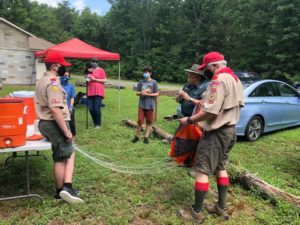
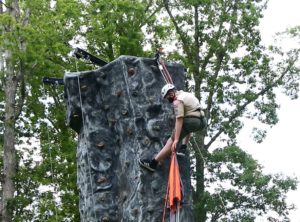
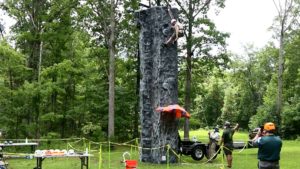 So then I had to test it, but I didn’t know any high buildings or bridges that I could use. So then Ms. Trisha told me perhaps I could do it from the COPE wall at Camp Snyder and I said YES PLEASE! On Saturday we drove to Camp Snyder in Haymarket, Virginia and Ms. Trisha asked Mr. Waisanen, the NCAC COPE & Climbing Chair, if I could do my project and he said yes. We had to figure out how to drop it and how to collect the data I needed for the requirements. There was another adult, Mr. Lesko, who talked to me about how to throw or drop the parachute from the 24’ high tower. I chose static drop, because that was easier and more reliable for
 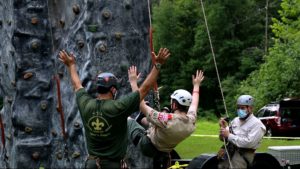 deploying and collecting data. I also had to figure out how to pull the parachute back up after each drop and how to stay at the top of the climbing tower and still be able to use my hands. The COPE teachers showed me how I could put my feet against the wall so I could use my hands. That was really cool! I had a looped cord all the way down that they tied the parachute on, so I could pull it up every time and I dropped the parachute 3 times. My mom took the hang time with a stopwatch and my friend Keefer checked the box to make sure it wasn’t damaged and to check the supplies inside. The box was still good after 3 drops, so my experiment was successful. After that I climbed down and we had to clean all the equipment we used with soap and water to make it safe for the next person to use.”